Going back to school: Advice from two KU graduates
Thinking about returning to college after time away?

Going back to college as an adult can feel like a big decision. Maybe you started a degree years ago and never finished. Maybe your career goals have changed, or you're ready to pursue something you've always wanted to do.
You might be wondering how to pay for college, fit classes around work and family or get back into the rhythm of being a student.
2026 University of Kansas graduates Jeff Kluender and Kristin Rainbolt took unique paths back to college.

Jeff transferred to KU after earning an associate degree and taking a 10-year break from school.
Kristin also returned to college years after first attending, bringing credits from previous colleges while raising her family and homeschooling three children.

Although their paths were different, each student found ways to make college work for their lives.
Going back to college
For Jeff, returning to college helped him recognize his potential and feel more confident pursuing his career goals.
Jeff was working in a before-and-after-school program for the North Kansas City School District when he began thinking about returning to college. He spent time with high school students volunteering to earn hours toward college funding, and their enthusiasm inspired him to continue his own education.
After earning his associate degree at Maple Woods Community College in Kansas City, Missouri, he applied to KU. “I didn’t know what I was truly capable of until I returned to school,” said Jeff.

Kristin's path to KU took a different route. She first attended community college as a teenager, but marriage and raising a family changed her priorities. Years later, it was a cancer diagnosis that gave her the perspective she needed to go back to school and finish her degree.
She had carried that goal with her for years. As she considered returning to school, she realized she didn't want to keep wondering what might have happened if she had finished college.
“Completing my bachelor's degree became more than an academic achievement. It became a reminder that every season of life still holds purpose, and that it's worth investing in the dreams you've carried for years,” Kristin said.
How to go back to school as an adult
If you're thinking, “I want to go back to school. Where do I start?” begin by identifying your goals and learning what options are available to you.
1. Decide what you want your degree to help you do
Start with the reason you're considering college. Do you want to qualify for a new job, advance in your current career, explore an academic interest or finish a degree you started years ago?
Your answer can help you choose a major and determine what type of degree best fits your goals.
Jeff studied political science with a minor in journalism at KU. He is now interviewing for positions in county and local government.

Kristin earned a Bachelor of General Studies in Liberal Arts & Sciences in an online format. Her studies deepened her interest in history and prepared her to pursue a Master of Arts in History next. She hopes to eventually teach history at the community college level.
When it comes to students going back to school later in life, finding an educational direction that fits your life is a top priority.
2. Find out whether your previous college credits will transfer
If you've attended college before, one of your first questions may be how much of that coursework still counts.
Your first step is to gather your transcripts and talk with an admissions representative about how your previous coursework could apply to your intended program. Ask which requirements remain, whether any additional prerequisites are needed and what a realistic timeline might look like.
At KU, students can use CredTran to look up previously evaluated courses and explore how credits may transfer. An official evaluation can help clarify which courses count toward specific degree requirements.
Previous coursework played an important role in each graduate's return to college. Jeff transferred an associate degree, while Kristin brought 60 credit hours from multiple institutions.

Even though she hadn't completed an associate degree, KU accepted all the credits Kristin brought with her.
“Because my previous coursework transferred, I was able to focus on the subjects I was passionate about and make the most of my time at KU,” said Kristin. “I was able to take classes that deepened my love of history and religion and helped prepare me for my next step as a graduate student.”
Jeff also found that his previous coursework transferred or substituted for KU requirements. When he encountered a question about one course, he worked with his advisors to resolve it. “I was absolutely surprised that every credit I had, already had an equal transfer or substitution,” said Jeff.
3. Explore programs that fit your schedule
Going back to college as an adult often means balancing school with work, family, caregiving or other responsibilities. Think about how much time you can realistically devote to classes and assignments each week.
Consider whether you need a full-time or part-time schedule, in-person classes, online courses or a combination. Ask about course availability, class meeting times and how long it might take to finish your degree at your preferred pace.
Jeff initially attended in-person classes during the week and returned to Kansas City to work double shifts on weekends. After his first year, he realized that combining in-person and online courses gave him a better balance.

Kristin needed flexibility, too. As a homeschool mom of three, she wanted to complete her coursework around her family's schedule rather than commit to set online meeting times every week.
She developed a routine for schoolwork, used audio versions of textbooks when available and set aside one day each week to focus on her family without doing assignments.
“Balance is important because pursuing a goal should not mean forgetting to enjoy the life you are living,” Kristin said.
4. Make a plan for paying for college
Cost is an important consideration when you're returning to school. Before enrolling, estimate your remaining tuition and fees, books, transportation and other expenses. Then explore potential sources of funding.
Depending on your circumstances and program, options may include:
- Transfer scholarships
- Financial aid
- Employer tuition reimbursement
- Military or veterans' education benefits
- Part-time enrollment
For Kristin, a transfer scholarship offered by KU helped make returning to college financially possible for her family. “Cost was something my family had to carefully consider,” said Kristin. “I wanted to pursue my degree in a way that was responsible for our family while still moving toward my goals.”
“Ultimately, KU became the right fit because it made completing my degree feel possible. As a transfer student, the scholarship KU offered helped make the cost manageable for my family and showed me that KU valued students like me who were continuing their education journey.”
— Kristin Rainbolt, BGS in Liberal Arts & Sciences, University of Kansas
You can explore KU's transfer admissions information and KU Online tuition and affordability resources to learn more about options and costs. Aid and scholarship eligibility varies by student and program.
What is it like going back to school in your 30s or later?
Returning to college after years away can bring questions you might not have considered the first time. Will you fit in? Will your academic skills feel rusty? Can you keep up with assignments while managing everything else in your life?
Jeff and Kristin each had to adjust to being students again, but they also discovered that their life experiences gave them a different perspective on education.
At KU, Jeff approached his education differently. He asked questions, welcomed feedback and communicated with his professors when he needed help. “I was a little anxious at first,” he said. “It had been 10 years since I was in school and I didn't leave the first time with the best experience. From day one at KU, I could tell things were different this time.”
He also developed a stronger appreciation for the opportunity to learn. “I had much more of a respect for my education than my first time in college,” said Jeff. “I valued any and all feedback from professors and fellow students.”
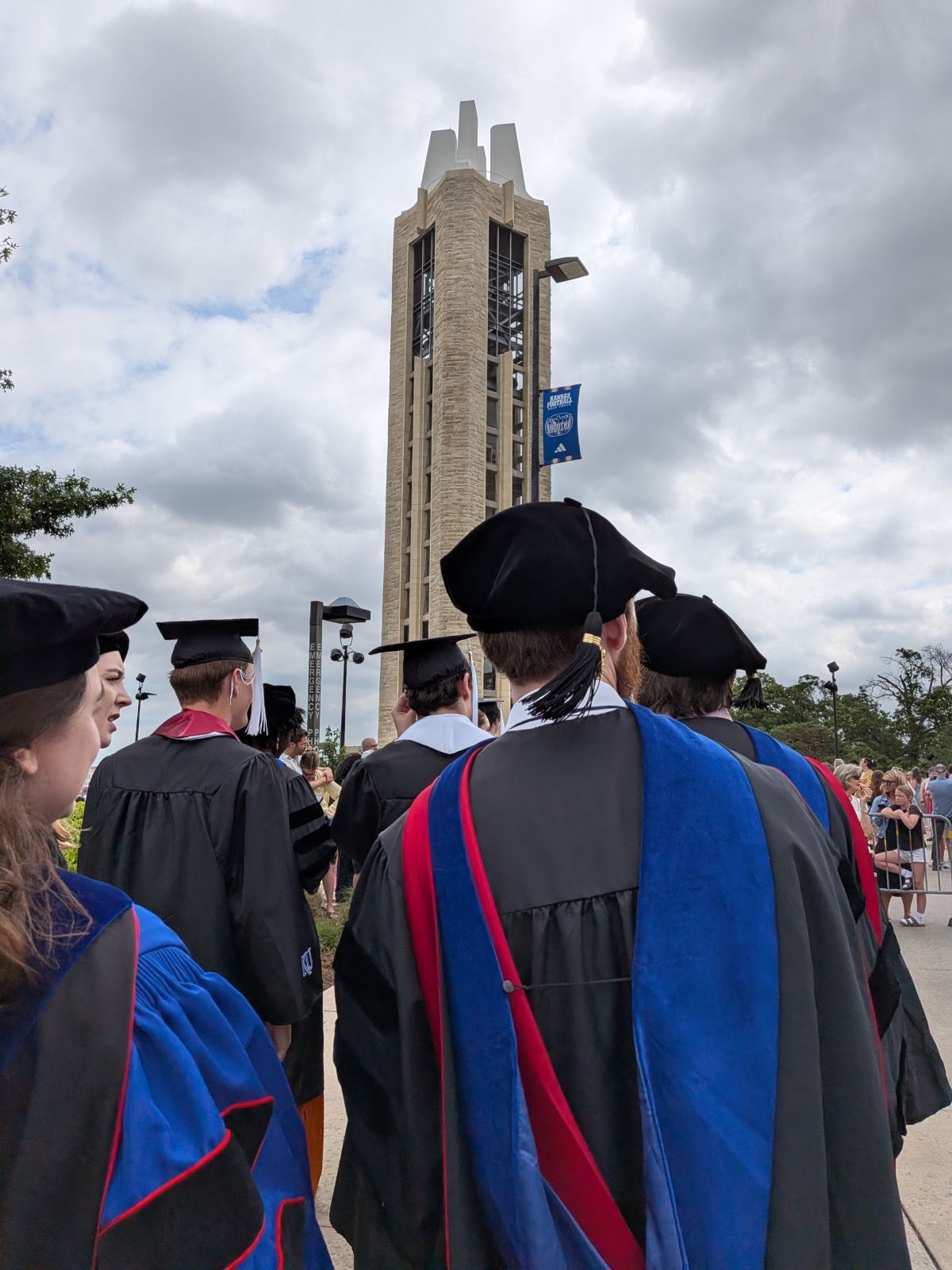
Kristin worried that her writing skills had grown rusty and questioned whether she could still manage college-level work. With practice and encouragement from her professors and family, she regained her confidence.
“Returning to school as an older student brought its own questions,” said Kristin. “I wondered what it would be like to have professors who were younger than me and how that dynamic would work. I quickly learned that my life experiences were an asset, and I found that my professors and many fellow students valued the perspective I brought to the classroom.”
Going back to school as an adult: Finding time for college
There isn't one schedule that works for every adult learner. What matters is finding a routine you can maintain and adjusting it when life changes.
Jeff and Kristin found different ways to make school fit around their responsibilities.
Jeff started by focusing on school during the week and working weekends. Once he understood what he could manage, he adjusted his course formats to create more balance.
Kristin planned specific blocks of time for assignments and treated them as commitments. She also looked for practical ways to use her time efficiently, including listening to audio textbooks while doing household chores or driving.
Their experiences offer a few useful reminders:
- Build a realistic schedule. Account for class time, assignments, work, family responsibilities and rest before deciding how many courses to take.
- Ask for help early. Talk with professors and advisors when you have questions or need help understanding your options.
- Use available resources. Look for course materials, academic support and online learning options that fit your needs.
- Adjust when necessary. Your first schedule may not be the right one. Give yourself time to figure out what works.
Jeff credits his advisor, professors, coworkers and managers with helping him stay on track. Kristin credits her family's encouragement and willingness to support her goal.
Building a support system can help make the commitment more manageable.

It's never too late to finish what you started
Jeff encourages former students to return at a pace that works for them rather than feeling pressured to finish within a specific number of years.
“Investing in yourself is the best decision you'll ever make,” said Jeff. “The question isn't whether you should go back to school. It's what you want school to help you become.”
Kristin suggests focusing on the next assignment, class or semester instead of feeling overwhelmed by the entire degree. “The credits you have already earned are not wasted, and it is never too late to finish what you started,” Kristin said.
Although they took different paths to KU, Kristin and Jeff offer similar advice to adult learners: Know what you want to accomplish, explore your options and take things one step at a time.
“Going back to school later in life taught me that it is never too late to pursue a goal,” Kristin said. “I learned that my life experiences were not obstacles; they were strengths that helped me become a better student.”