What is tuition reimbursement?
How Employer Tuition Reimbursement Works for Graduate School

If your employer offers tuition reimbursement, you may already have one of the best ways to help pay for graduate school.
Tuition reimbursement means your employer helps cover some — or all — of your education costs, often by paying you back after you complete your classes. Your employer may have rules about which programs, courses or expenses qualify, so it’s important to understand your benefits before you enroll.
Unlike scholarships or grants, tuition reimbursement usually comes after you’ve paid for your classes and successfully completed them. Knowing what your employer covers and when you’ll receive the money can help you plan how to pay for graduate school.
At a Glance
What is tuition reimbursement?
Tuition reimbursement is an employer benefit that reimburses employees for eligible education expenses after they successfully complete approved coursework.
Why do employers offer tuition reimbursement?
Many employers use tuition reimbursement to help employees build new skills, advance in their careers and stay with the company. Helping employees continue their education can also give employers the skilled workers and future leaders they need.
For employees, it can be one of the most affordable ways to earn a graduate degree.

How does tuition reimbursement work?
While every employer has its own policies, most reimbursement programs follow a similar process.
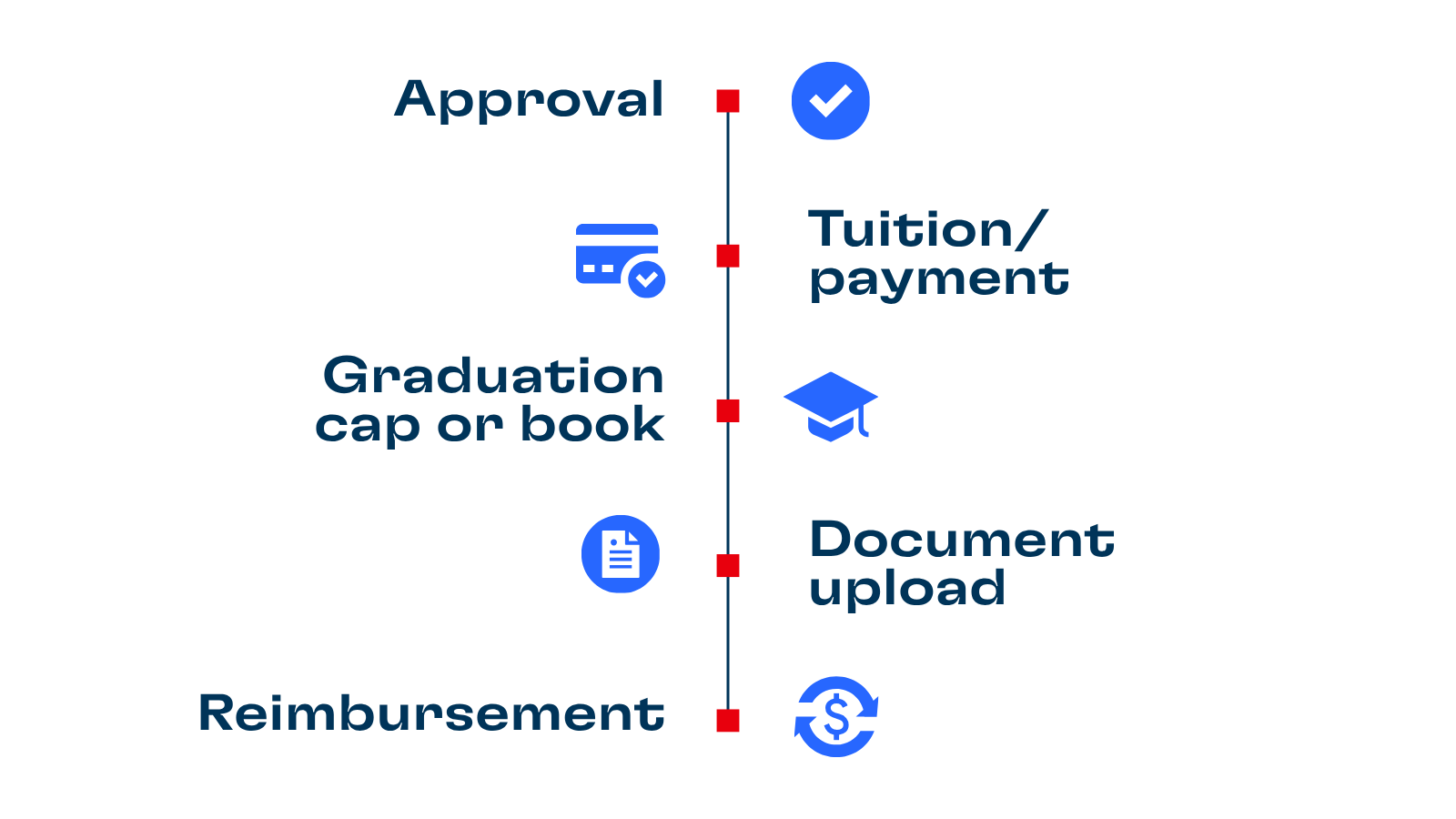
Step 1: Get employer approval
Many employers require approval before you register for classes.
Step 2: Pay your tuition
You'll typically pay your tuition upfront. Some students use savings, payment plans or financial aid while waiting for reimbursement.
Step 3: Complete your coursework
Most employers require employees to successfully complete the course before they reimburse you.
Step 4: Send in what your employer needs
You'll usually submit:
- Final grades
- Tuition receipts
- Reimbursement forms
Step 5: Receive reimbursement
Once everything is approved, your employer reimburses eligible education expenses.
Tuition reimbursement vs. tuition assistance
Although people often use these terms interchangeably, they're not the same.
Tuition reimbursement | Tuition assistance |
|---|---|
You pay first | Employer pays first |
Employer reimburses you later | Employer often pays the school directly |
Usually requires successful course completion | Payment is often made before classes begin |
What are the requirements for tuition reimbursement?
Every employer is different, but common requirements include:
- Maintaining a minimum grade (often a B or higher)
- Taking courses related to your current job or career
- Staying with your employer for a certain amount of time after you finish your courses
- Receiving approval before classes begin
Always review your employer's specific policy before enrolling.
What does tuition reimbursement usually cover?
Depending on your employer, tuition reimbursement may include:
- Tuition
- Mandatory university fees
- Required textbooks
- Course materials
- Professional certification courses
Not every employer covers every expense, so check your company's policy before enrolling.

Can you combine tuition reimbursement with financial aid?
Often, yes.
Many working professionals combine employer tuition reimbursement with:
- Payment plans
- Scholarships
- Federal financial aid (if eligible)
Because reimbursement usually comes after you've paid tuition, it's important to have a plan for covering your costs upfront.
Before you enroll: questions to ask your employer
☐ Do I qualify?
☐ Which graduate programs are eligible?
☐ How much will be reimbursed each year?
☐ When will I receive reimbursement?
☐ What grades do I need to earn?
☐ Do I have to stay with the company afterward?
Frequently Asked Questions
Usually, yes. Most tuition reimbursement programs require employees to pay tuition before being reimbursed.
Some tuition reimbursement may be taxable, depending on how much your employer pays and current IRS rules. Because tax situations vary, it's best to check with your HR department or tax professional if you have questions about your reimbursement.
No. Benefits vary by employer, so check with your HR department.
Many employers reimburse tuition for online graduate programs, but each employer sets its own requirements.
Many employers will reimburse eligible graduate certificate programs in addition to master's degrees. Coverage varies by employer, so check whether certificate programs qualify under your organization's tuition reimbursement policy before enrolling.
It depends on your employer. Some companies cover a set amount each year, while others cover a percentage of your tuition. Check with your employer or HR department to see what you qualify for.
For many working professionals, yes. Employer tuition reimbursement can significantly reduce the cost of earning a graduate degree.