What is a Jayhawk? The story behind KU’s mascot
From Kansas history to campus tradition, the Jayhawk is more than a mascot.
It’s a symbol you can spot all across the University of Kansas if you know where to look.

If you’ve ever caught a KU basketball highlight on TV, you’ve probably seen the Jayhawk in action. If you’ve ever wondered why KU students and alumni proudly call themselves Jayhawks, the answer goes back much further than sports.
And if you’ve ever heard the Rock Chalk Chant or noticed the iconic bird around campus, you might be wondering: What is a Jayhawk?
Quick answer: What is a Jayhawk?
A Jayhawk is the official mascot of the University of Kansas. It’s a mythical bird that symbolizes Kansas pride, resilience and history. It represents the spirit of KU in everything from athletics to academics and campus life.
Are Jayhawks real?
No. Jayhawks are not real birds. The Jayhawk is a fictional bird created to represent Kansas history and the identity of the University of Kansas.
The Jayhawk was originally designed as a mash-up of two real birds local to Kansas: the bold, raucous Blue Jay and the stealthy, fierce Sparrow Hawk (now known as the American kestrel).
The history of the Jayhawk
The term “Jayhawk” dates back to the 1850s, during a turbulent time in Kansas history known as Bleeding Kansas.
During this period, groups known as Jayhawkers were associated with the fight to keep Kansas a free state. Over time, the name came to represent a fierce version of independence and determination.
When the University of Kansas was founded, the Jayhawk became a natural symbol that reflected both the state’s history and the spirit of its students.
Today, the Jayhawk is more than just a mascot. It’s a connection to Kansas history and a symbol of what it means to be part of KU.

What does the KU mascot represent?
The Jayhawk represents:
- Resilience
- Independence
- Curiosity
- Kansas pride
- KU community spirit
For students, alumni, and fans around the world, the Jayhawk mascot is both a historic symbol and a living tradition.
Mascots before the Jayhawk
Before the Jayhawk became the official symbol at KU, there was no official mascot used consistently across campus or athletics.
In the early days of KU athletics, teams were sometimes referred to by different informal names, and there are scattered references in campus lore to animal symbols being used in spirit displays at various points in history.
In fact, for a single football season in 1909, the university was represented by a temporary live pig named Don Carlos.
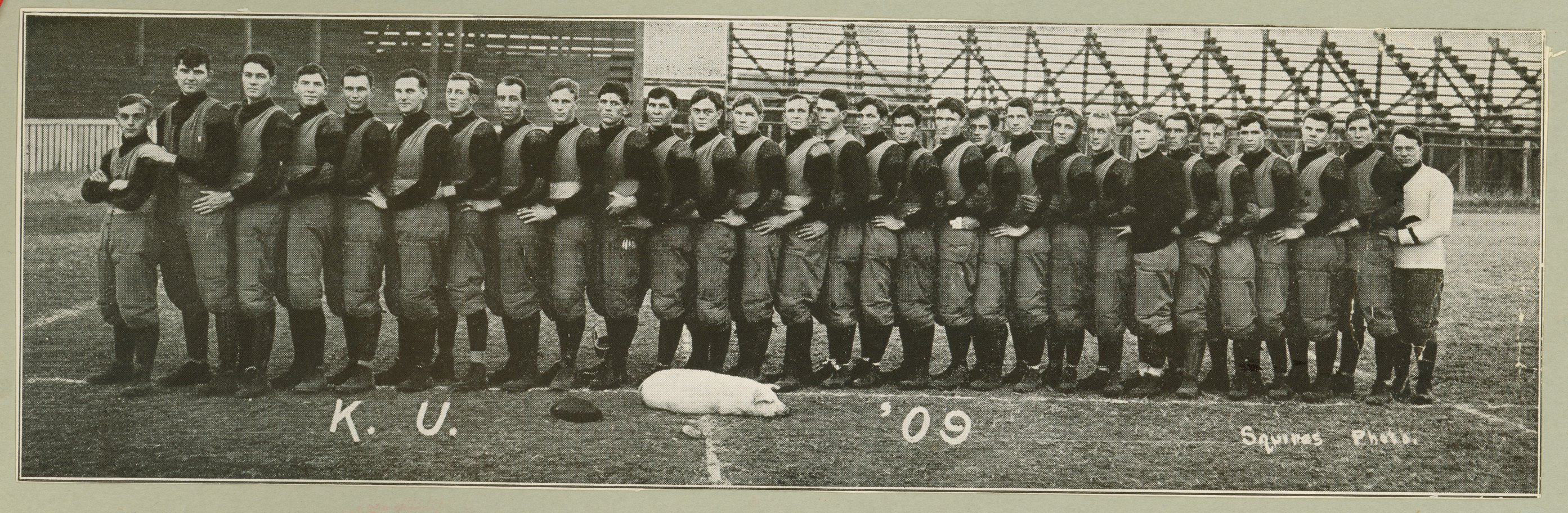
The Jayhawk eventually emerged as the defining symbol for KU because it connected more directly to Kansas history and identity than any earlier informal references. By the early 20th century, it had fully replaced other unofficial symbols to become the permanent mascot of the University of Kansas.
Meet the Jayhawk today
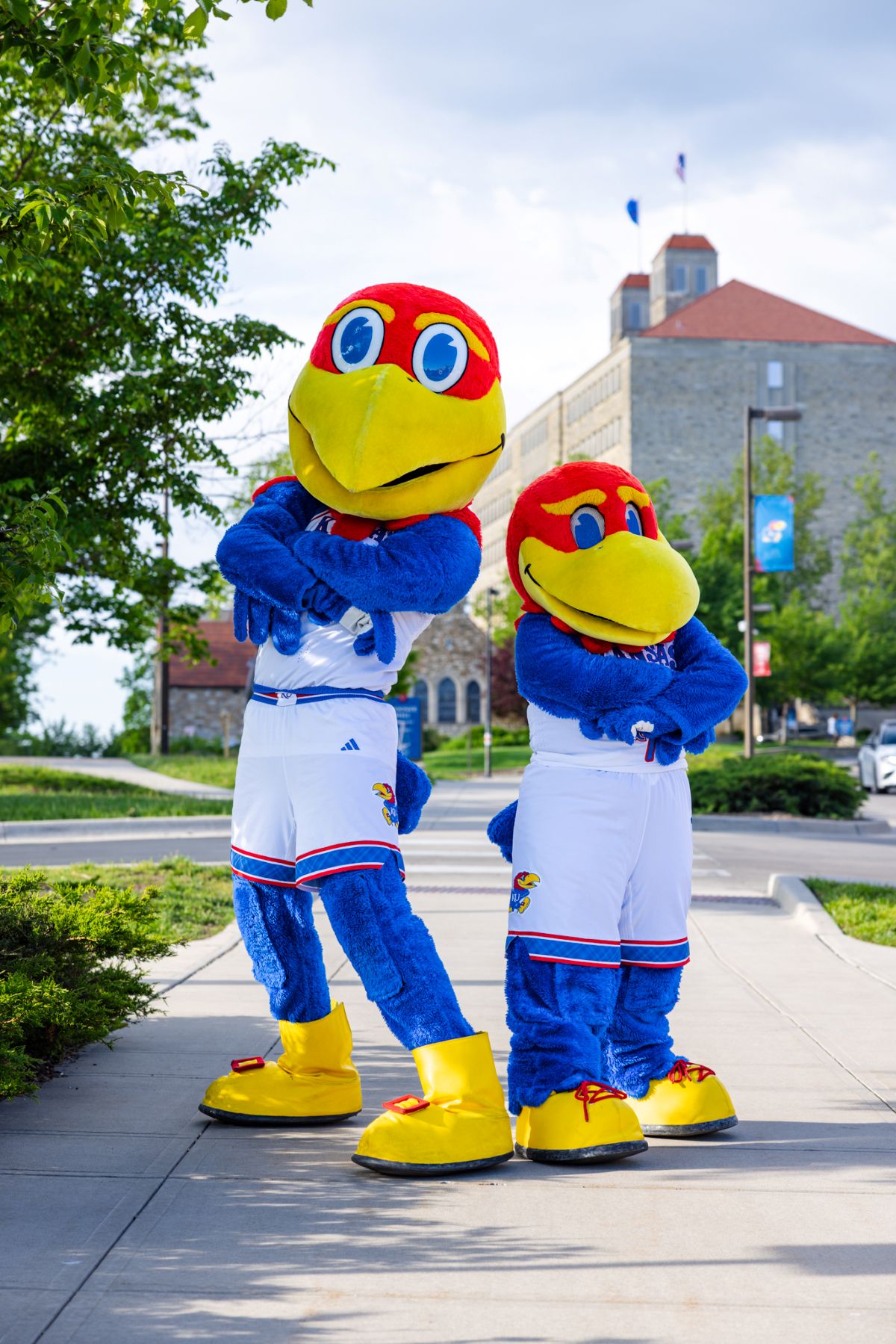
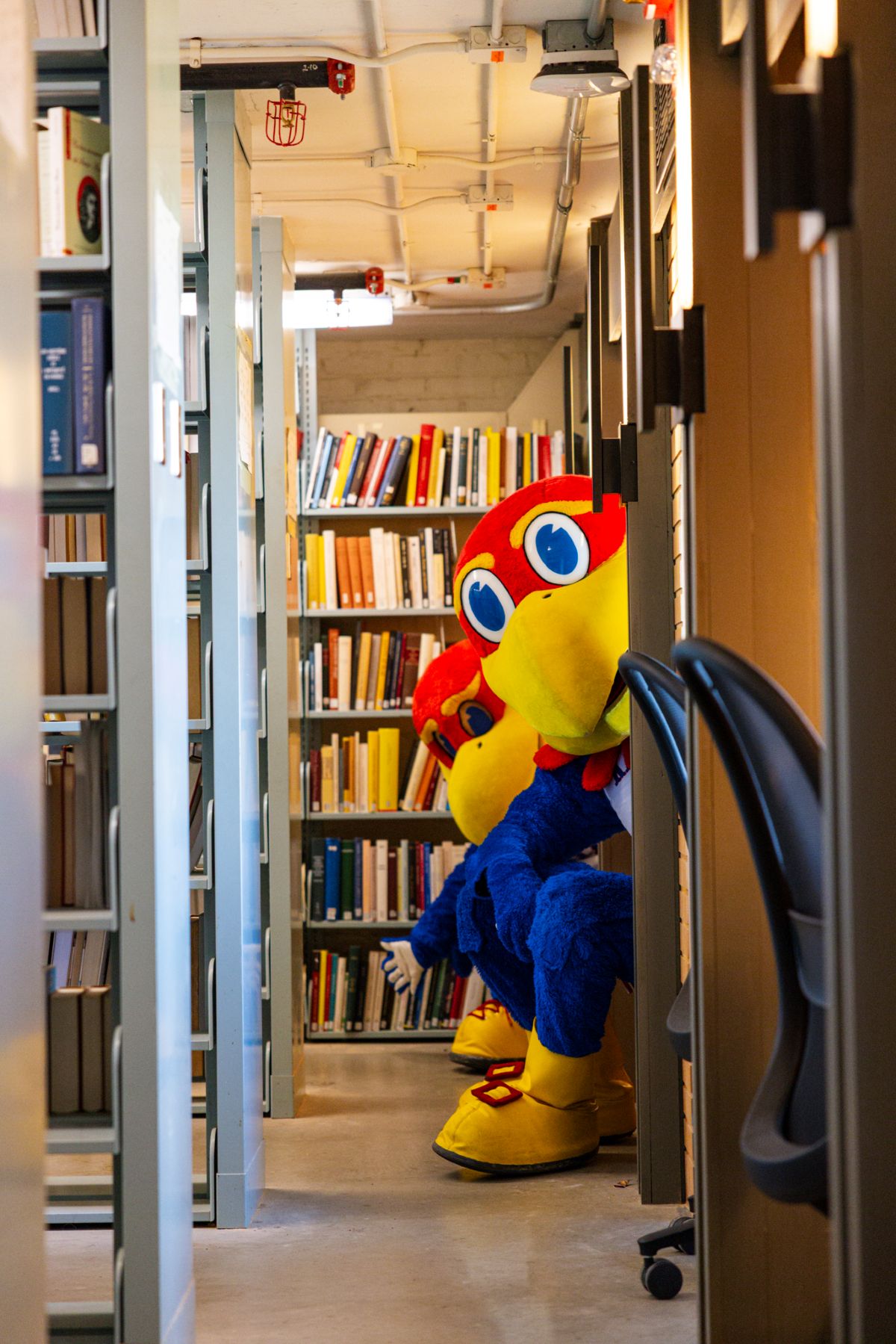
On campus and at games, the Jayhawk comes to life through KU’s mascots, Big Jay and Baby Jay.
You’ll see them everywhere from Allen Fieldhouse on game days to campus events throughout the year. They’ve come to represent the energy and traditions that define the University of Kansas and its student life.
A fun way to explore campus: Find the Jayhawk
If you’re visiting campus, whether as a future student, a family member, or someone in town for a major event, there’s a fun way to experience KU.
Turn your visit into a “Find the Jayhawk” adventure.
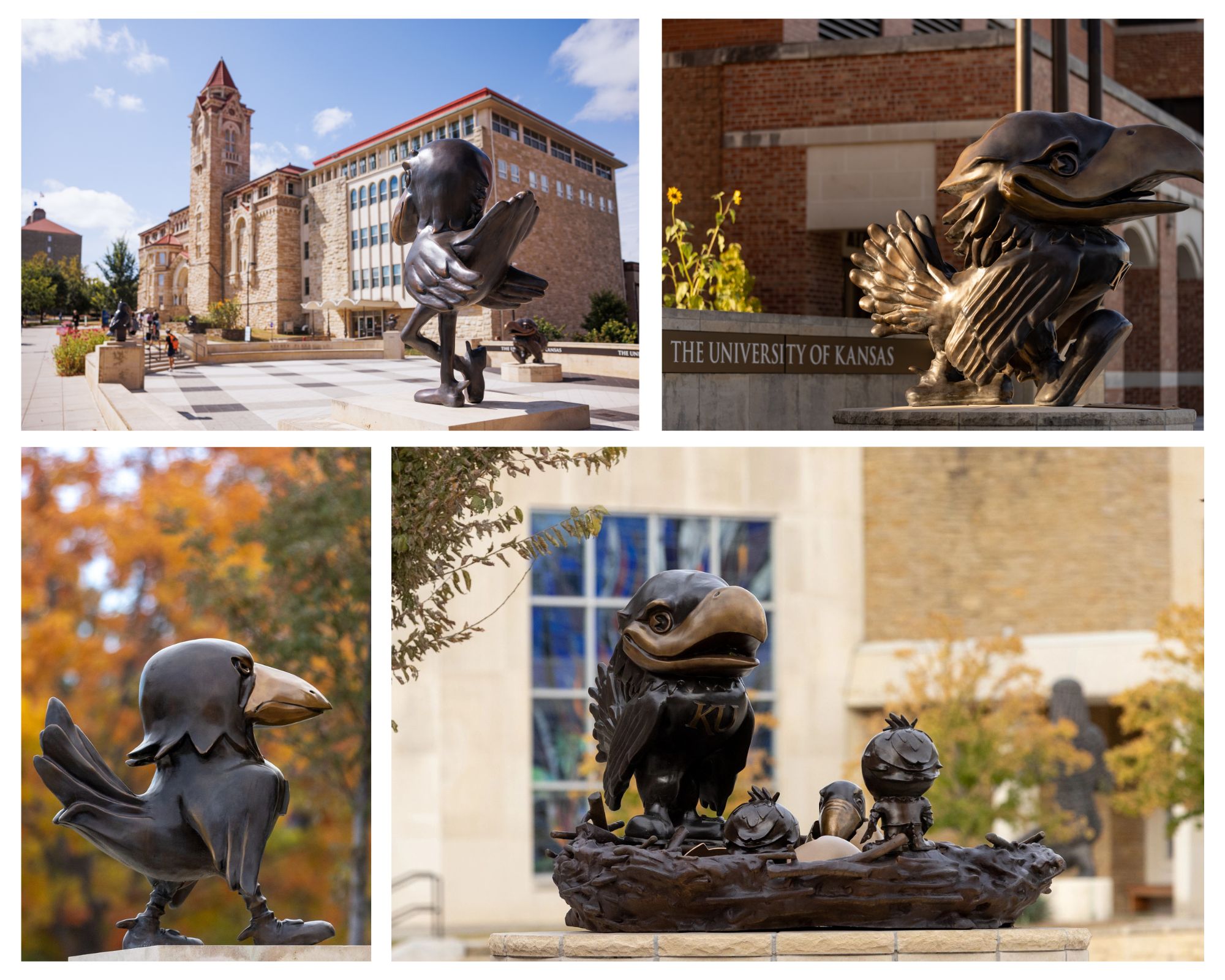
Jayhawks are hidden across campus in statues, sculptures, signs and unexpected places. Once you start looking, you’ll see them everywhere.
Here are a few great places to begin:
- Take note of the iconic Jayhawk statue called “Academic Jay” located in front of Strong Hall
- Visit the evolution of the Jayhawk collection, located at the Ascher Plaza outside of the Kansas Memorial Union
- Check out the Baby Jay statue located in front of the Jayhawk Welcome Center
- Spot the colorful Jayhawk statue located in front of the Lied Center
Tip: Keep a count as you go. It’s an easy way to turn your visit into a challenge.
Many visitors search for where to see the KU mascot on campus or what the Jayhawk bird looks like in real life. This is the best way to experience it firsthand.
Why the Jayhawk matters
At first glance, the Jayhawk might seem like just a mascot. For students, alumni, the Lawrence community and lifelong fans, it represents so much more.
It reflects a curiosity of spirit and a sense of independence that is only found here in Lawrence, Kansas. The Jayhawk itself is a blend of history and imagination, just like the students who come to KU.
Kansas Jayhawk FAQ
The University of Kansas mascot is the Jayhawk; a symbolic bird tied to Kansas history and KU identity.
A Jayhawk is the official mascot of the University of Kansas. It is a mythical bird that represents Kansas pride, history and the spirit of the KU community.
The name comes from Kansas history in the 1850s during the territorial period. “Jayhawkers” were associated with the fight for a free state, and the term evolved into the Jayhawk symbol used by the University of Kansas.
No. The Jayhawk is not a real bird. It’s a mythical bird created as the mascot and symbol of the University of Kansas.

Plan your visit to KU
Want to experience the joy of Jayhawk culture for yourself?
Schedule Your Campus Visit