Wondering Where to Begin? With a Vision. KU Will do the Rest
Mark Harley arrived at KU unsure of himself and unsure of the path ahead. What he found was a community that challenged him, supported him, and helped him grow into a future educator and campus leader.

This Jayhawk POV story was written by Mark Harley, a secondary education major focused on history and government at the University of Kansas. As a first-generation college student, Mark came to campus without a clear blueprint for success.
He didn’t know exactly how college worked or what it would take to thrive, but he knew he wanted to become a teacher who creates belonging for others. By leaning into KU’s support systems and getting involved across campus, from student leadership to residential life and undergraduate research, Mark found his footing and his voice.
In his own words below, he shares how uncertainty turned into purpose.
I Came to KU Without a Map
My name is Mark Harley, and I'm a student at the University of Kansas studying Secondary Education (History & Government) to become a 6-12th grade teacher. Coming to KU wasn’t a story of “I always knew exactly what I wanted.”
In high school, my GPA and test scores didn’t look nearly impressive enough, and I didn't really understand college at all. I didn’t even know what a bachelor’s degree was. [Editor’s note: New to college terms? Explore our guides to What is an Undergraduate Degree? and Bachelor of Arts vs. Bachelor of Science.]
I'm the first in my family in my family to attend a four-year university, and I didn’t walk in with a clear blueprint for how to succeed.
What I did have was a reason: I wanted to be a teacher. Before college, I went to 12 different school districts and lived in multiple states before eventually landing in Kansas.
Moving that much teaches you that belonging is not automatic. You have to build it. I knew I wanted to ensure people feel like they belong, whoever they are. When I arrived at KU, how would I do this — no idea.

Finding KU’s Support
My first year, I needed structure and proof that I could do college-level work. KU has more support systems than I expected — not like I came in expecting anything — but I just had to find and use them.
I took University 101, which might sound simple, but it helped me understand how to navigate college and what “successful” habits actually looked like.
Along with achieving better academic confidence, I always knew Math and English were huge hurdles for me, so I worked my way through the sequence and took advantage of every support I could find: Extra credit, the evening supplemental instruction and the Writing Center.
The feeling of always feeling like I needed support was a great trait to have. Around the same time, I joined the Mentored Scholars Program (MSP), which was a turning point. As a first-generation student, having mentorship, community, and receiving my first scholarship was a big “I belong here.”
I started to realize something that sounds obvious now but wasn’t obvious then: if you ask for help and show up consistently, people at KU will meet you halfway. That was the first shift in my mindset. I went from “I hope I can survive this” to “Wait — if I put in the work and use what’s here, what else can I do?”

Building Belonging and Getting Involved
My second year, I started, to be honest, feeling left out of KU sports culture. It's the main reason why many students might come to KU. I didn’t want to make sports my whole personality, but showing up to something bigger than yourself changes your sense of belonging and makes campus feel at home.
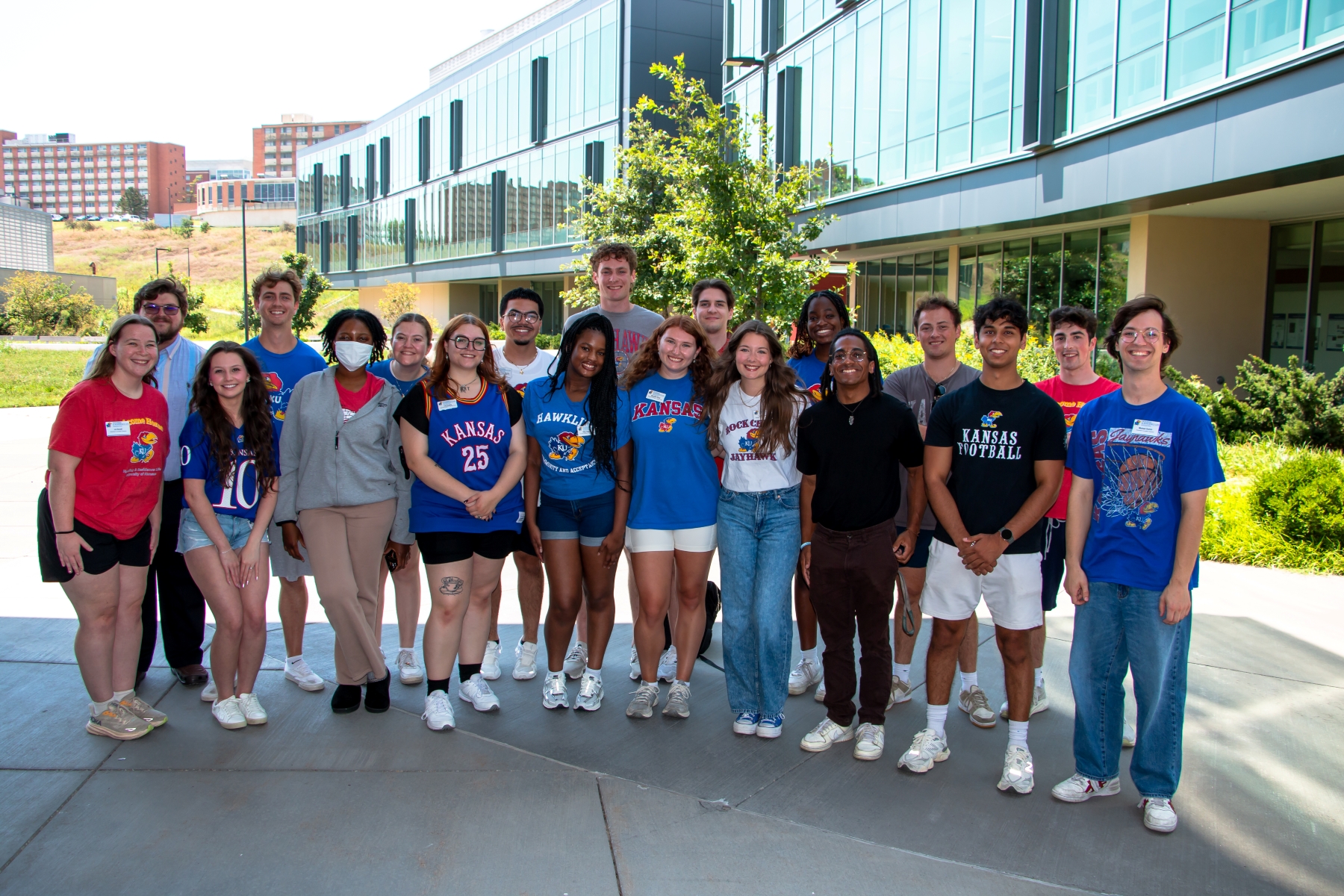
On top of that, I also became a Resident Assistant at Stouffer Place Apartments. I was able to share my story of academic success with upcoming freshman, able to create a community where everyone was included, and a nice housing spot on campus — A Win, Win, and another Win...
Experiential Learning Changed My Trajectory
By my third year, I was doing a lot — sometimes 100 miles per hour— and I had to learn how to keep ambition from turning into burnout. But that year also became proof of what can happen when you combine support systems with involvement and a real purpose.
I earned KU honor roll, and I was elected to the KU Student Senate to represent the School of Education and Human Sciences.

Both achievements, I never could have thought of, happened beginning my journey here. Little did I know how much further I would go beginning exploring undergraduate research.
At this point in my learning journey, I was able to question my learning and explore questions like: What helps students find purpose? What builds self-efficacy?What creates belonging in K-12 schools?
With support from KU — especially the Curriculum & Teaching department, faculty mentorship, and funding through the Center for Undergraduate Research (CURF) — I got to do work that felt real, meaningful, and away from the KU curriculum.
From Lawrence to Washington, D.C.

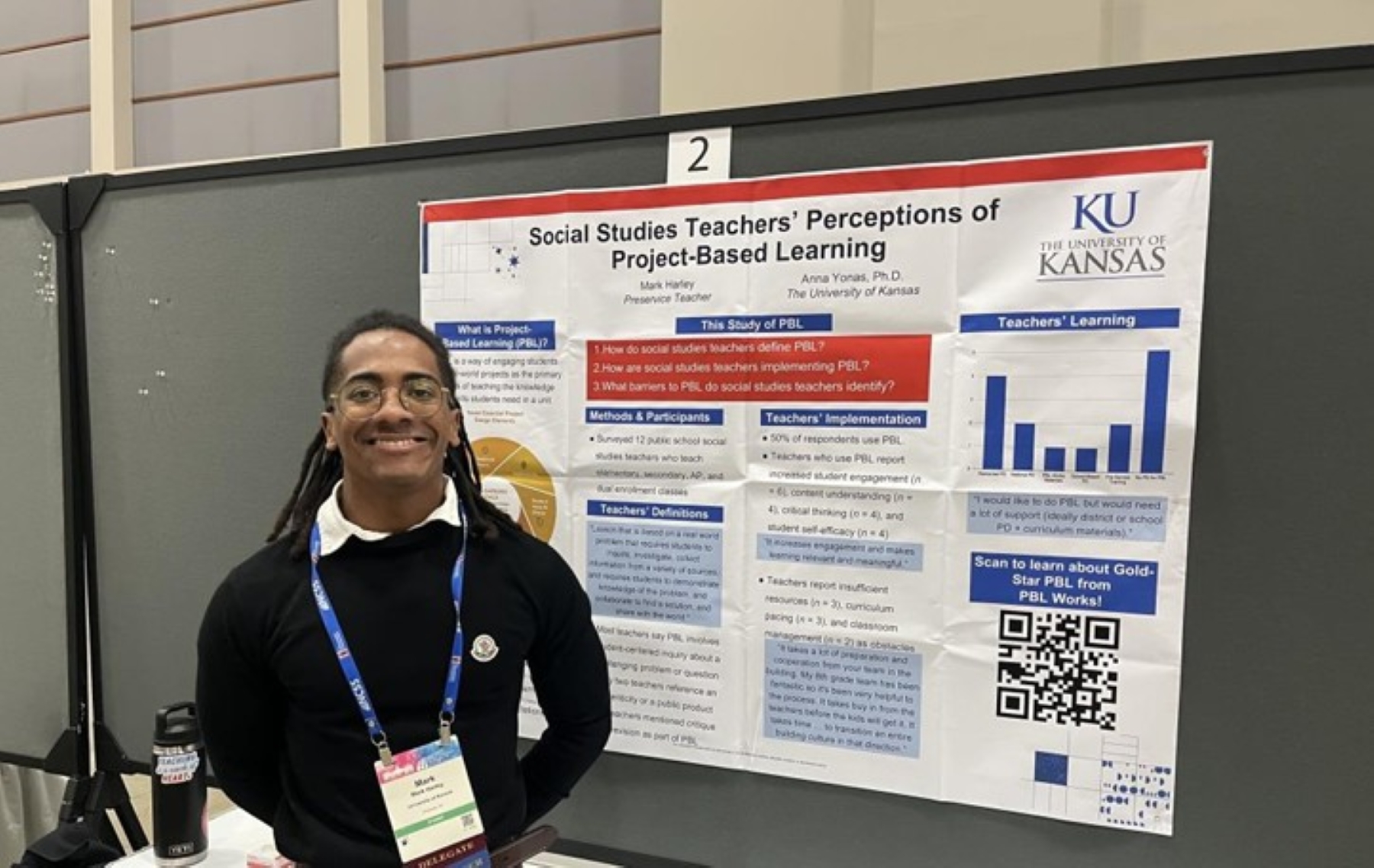
The biggest “How...am I here?” moment came when I had the opportunity to present my research in Washington, D.C. at the National Council for the Social Studies (NCSS) conference.
Standing there, presenting something I worked all year to build, I had a moment of clarity at that moment: I didn’t come to KU with a map, but I built one step by step.
At NCSS, I also served as the only pre-service teacher delegate in the NCSS House of Delegates, the governing body of the largest social studies education organization in North America. My biggest “oh, I'm him” moment.

What I’d Tell a Future Jayhawk
If you are unsure about KU, unsure about where you're going, unsure what you want out of this life, and especially unsure if you have fit the “university” look, I get it. I came in with doubts, gaps, and all these uncertainties mentioned above as well.
The biggest lesson I’ve learned is simple: vision doesn’t have to be perfect on day one. Just start. Use the support here. Show up consistently. Ask questions. And keep building.
There were many times I felt “why am I doing all of this? "And in those moments where my vision was blurred and foggy, my heart knew the way and drove me to be aligned with the true values disposed of within.
KU didn’t just give me a campus — I found support, myself, and a path towards the teacher / leader I want to be.