What can you do with a sports management degree? A KU student shares her experience
From football recruiting to event planning: How Trinity Dokes found her path in KU's Sports Management program
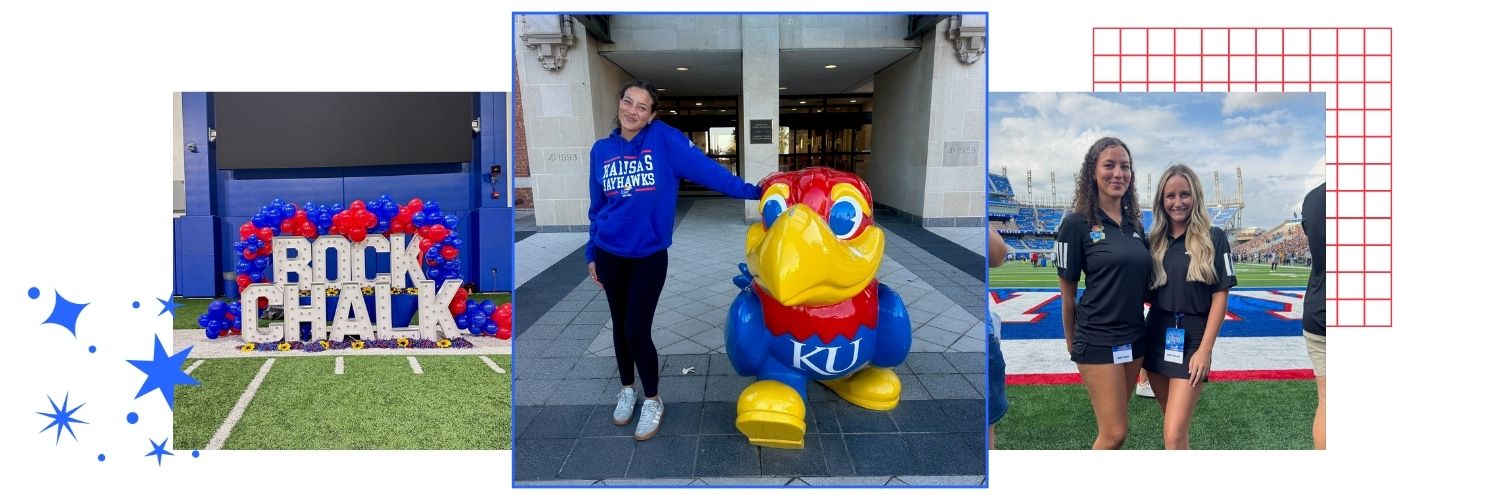
When Trinity Dokes arrived at the University of Kansas, she wasn't planning to major in sports management.
Originally interested in special education, she discovered the Sport Management program late in high school and quickly realized it combined many of the things she loved: community impact, leadership, event planning, and of course — sports.
Now a KU student working with Kansas Football recruiting operations, Trinity is gaining hands-on experience while exploring the many career paths available in the sports industry.
"If you think sports management only means becoming a coach or an agent, that's not really the case," she shared. "There are so many different directions you can go."
For students wondering what a sports management degree is, what careers it can lead to, and what it's really like to study sports management at KU, Trinity offers an inside look at the program.

What is sports management really like?
One of the biggest misconceptions Trinity had before starting college was assuming sports management was narrowly focused on coaching or team management.
Instead, she discovered a field filled with options.
"It revolves around sports, but it doesn't just mean management," she said. "I'm interested in event planning and operations, but other students are interested in marketing, recruiting, fundraising, communications, and a lot of other areas."
That variety shows up in the classroom.
Trinity says her courses have covered everything from personnel management and sports fundraising to ethics, leadership, law, and grant writing.
"You learn every aspect of sports management," she said. "You learn how to be a great leader, ethics, law, fundraising, sports marketing, and even how to run a facility. You're learning a lot of different skills from a lot of different perspectives."
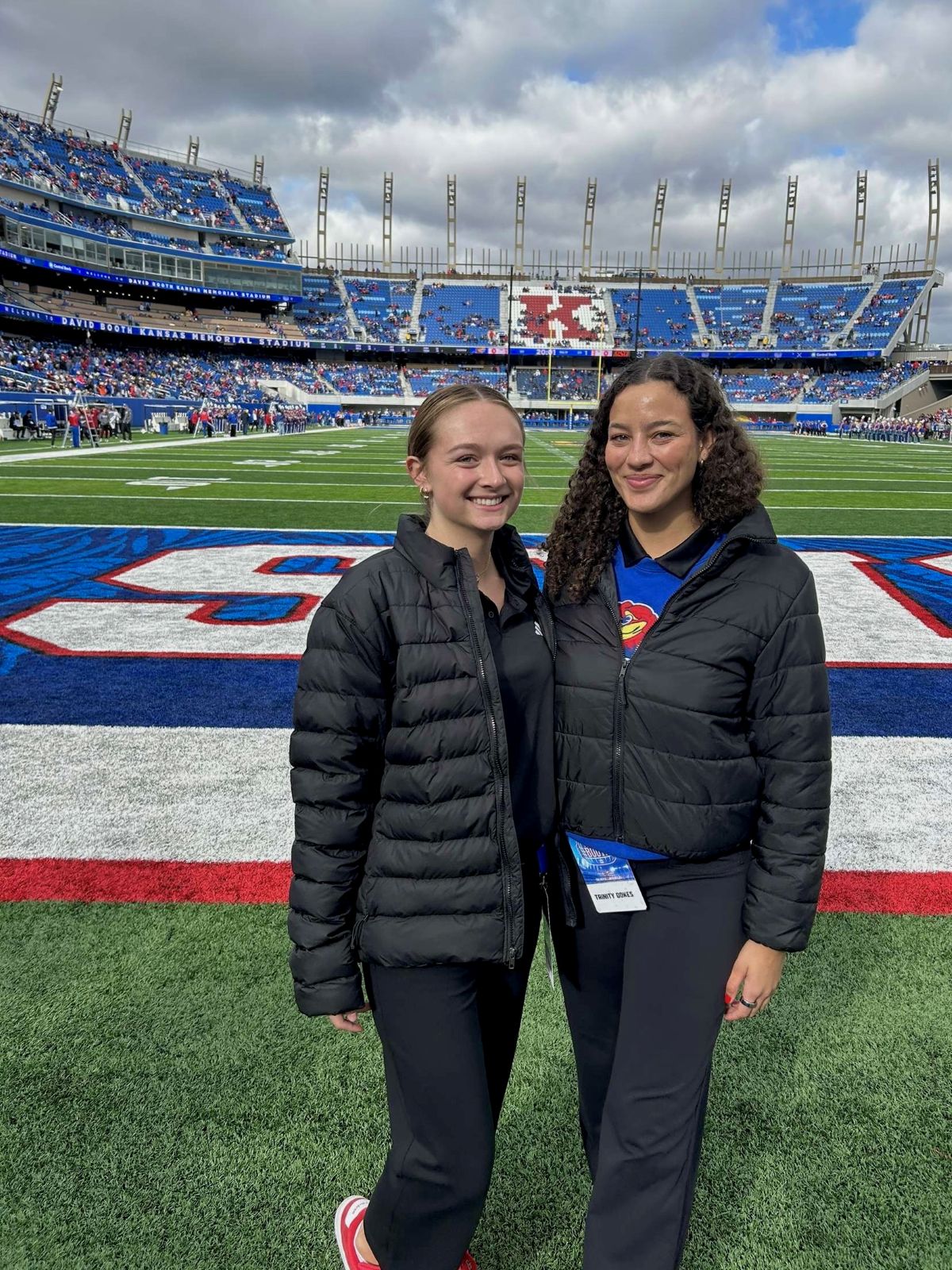
Why Trinity chose KU for sports management
Interestingly, KU came before the major.
Trinity had already committed to KU when she realized sports management aligned more closely with her career interests than her original plans.
"I wanted to be a teacher, and then I realized teaching wasn't really for me," she said. "Sports management became the perfect fit because I could still work with organizations like Special Olympics, still do community outreach and planning, but make it more sports-based."
Once she entered the program, she found a curriculum that continually reinforced that decision.
One course in particular stood out.
"Careers in Sport Management really opened my eyes," she said. "It made me realize there are more jobs out there than I actually thought. They're competitive, but there are so many opportunities. That class really made me realize I was in the right major."

Gaining real experience through Kansas Football
For Trinity, one of the most valuable parts of her KU experience has happened outside the classroom.
As a student intern with Kansas Football recruiting operations, she's had the opportunity to see firsthand how much work goes into attracting and hosting prospective student-athletes.
She first learned about the opportunity during an introductory sport management course. A presentation highlighting former students who had gone on to careers with professional teams and major organizations caught her attention.
"I remember thinking, 'Why not apply?'" she said. "If I got it, great. If I didn't, at least I submitted my first college application for a professional opportunity."
She got the position.
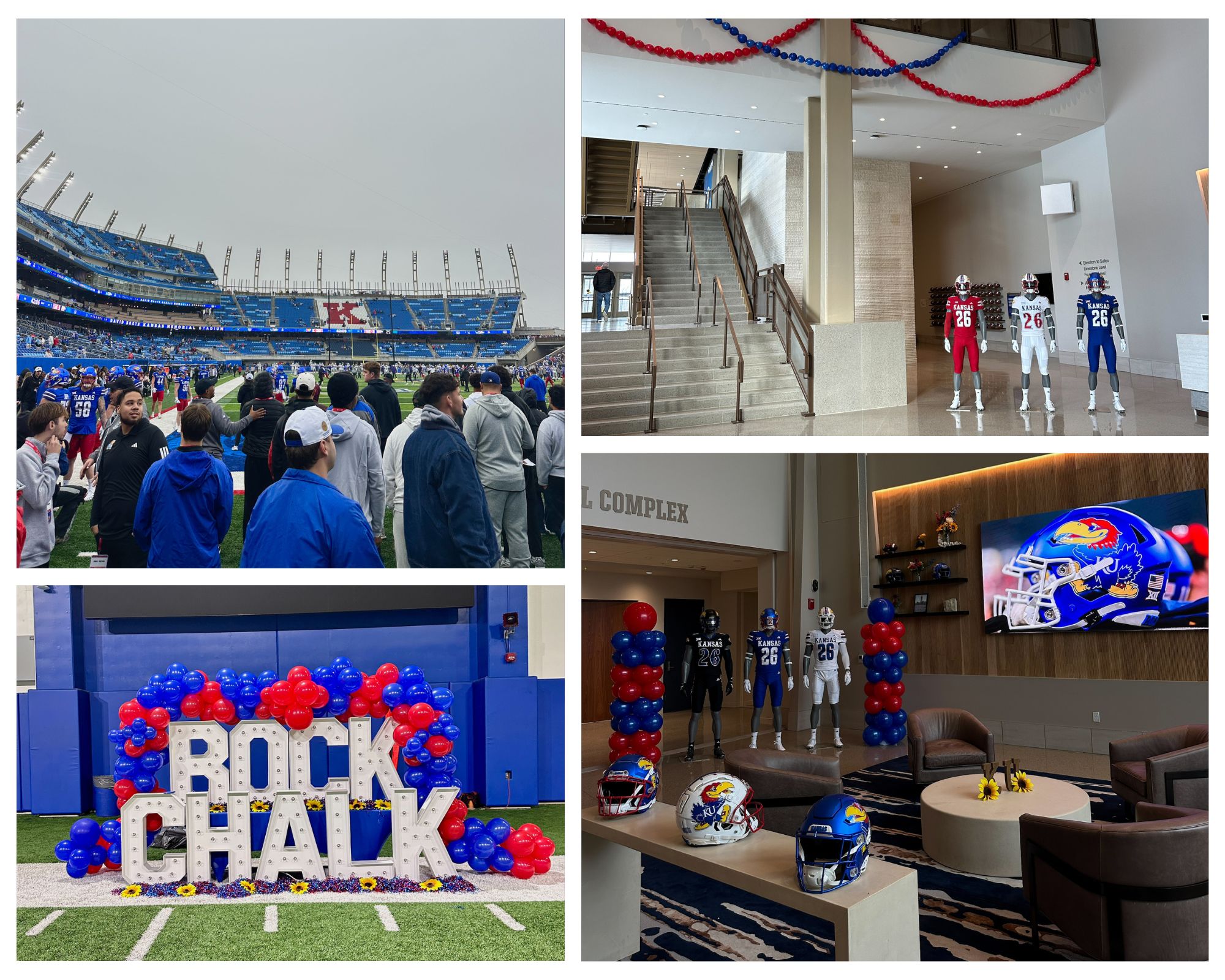
Today, her work includes coordinating recruiting visits, communicating with coaches, organizing logistics, preparing event spaces, assisting with compliance paperwork, and helping create positive experiences for prospective student-athletes and their families.
"It's a lot of the little details people don't see," she shared. "Making sure everything is organized, helping coordinate schedules, communicating with coaches, setting up events, and making sure the experience runs smoothly."
The experience has helped her build confidence while applying classroom concepts in a real-world environment.
Careers with a Sports Management Degree
One lesson Trinity returns to often is that sports management offers more career flexibility than many students realize.
"There are just so many different directions you can go," she said.
Students pursue careers in:
- Sports marketing
- Event planning and operations
- Athletic administration
- Recruiting and scouting
- Sponsorship and fundraising
- Community relations
- Facilities management
- Sports communications
- Sports journalism
- Coaching
- Ticket operations
- Fan engagement
For Trinity, event planning and operations remain the most exciting possibilities.
She enjoys the behind-the-scenes work that helps create successful experiences for athletes, recruits, and fans.

Learning from mentors and industry professionals
Another aspect of the program that stands out to Trinity is the faculty and mentors she has encountered along the way. She appreciates that many professors bring professional experience into the classroom rather than teaching solely from textbooks.
"I like that a lot of my professors wear multiple hats," she said. "They're involved in athletics, alumni relations, and other parts of the university, so they're teaching from real experience."
She's also found mentorship through her internship experience. She credits Kansas Football staff members Emma Kimble and Billy Bonneau with helping her better understand the industry and envision her future career.
"Being able to see people doing what I want to do has been really valuable," Trinity shared. "It's helped me realize that if you're willing to work for it, you can get there."

Finding community at KU
Like many students, Trinity admits her first week of college wasn't easy.
"I remember calling my mom and saying, 'If I don't like it after this week, I'm done,'" she said with a laugh.
But as classes started and she became involved, things changed.
Living in the residence halls, joining activities, building friendships, and getting involved through her internship gradually helped KU feel smaller and more familiar.
"KU can feel really big," she said. "But once you start finding your niche, it gets easier."
Her advice is simple.
"Say yes to everything," Trinity said. "Try things. Meet people. Give yourself time. You can't decide after one week. You have to give yourself a chance to find your routine and figure out what's best for you."
Today, she sees KU as a place full of connections. "You start realizing that even though the school feels huge, you know people everywhere you go," she said. "It starts to feel a lot smaller."
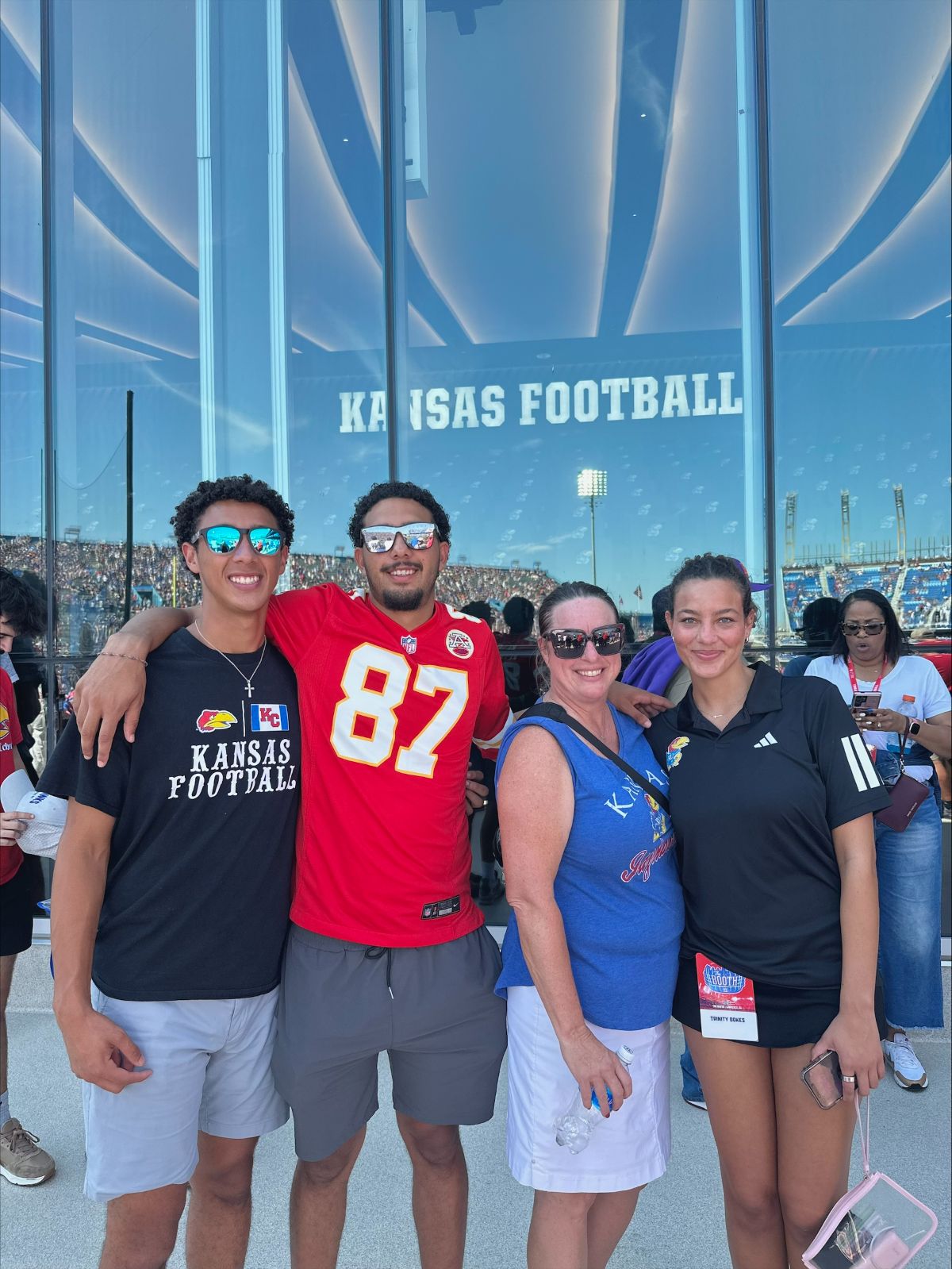
Is a sports management degree worth it?
For Trinity, the answer is yes.
The combination of classroom learning, professional experience, mentorship, and career exploration has helped her gain confidence in both herself and her future.
"I'm proud of putting myself out there," she said. "I've learned to be comfortable being uncomfortable."
That willingness to take chances has already led to internships, professional connections, and a clearer vision for her future in sports.
And it all started with saying yes to an opportunity she hadn't originally planned on pursuing.

Explore sports management at KU
Whether you're interested in athletics, event planning, marketing, communications, leadership, or operations, sports management can open doors to a wide range of careers across the sports industry.
As Trinity discovered, the field is much bigger than most students expect.
"There are so many opportunities," she said. "You just have to be willing to explore them."
FAQ: Sport Management at KU
Sports management combines business, leadership, marketing, operations, fundraising, event planning, communications, and organizational management within the sports industry.
Students study topics including leadership, ethics, sports law, fundraising, sponsorship, facility operations, marketing, and event management.
Sports management graduates work in areas such as event operations, athletic administration, recruiting, marketing, sponsorships, communications, fundraising, facilities management, coaching, and community outreach.
Students learn within a major Division I athletics environment and gain access to hands-on opportunities through KU Athletics, internships, and faculty with professional industry experience.