Transferring into engineering at KU: finding opportunity, flexibility and community
At KU, transfer students don’t wait to get involved. Emily Messenger stepped right into research, leadership and interdisciplinary learning from day one.
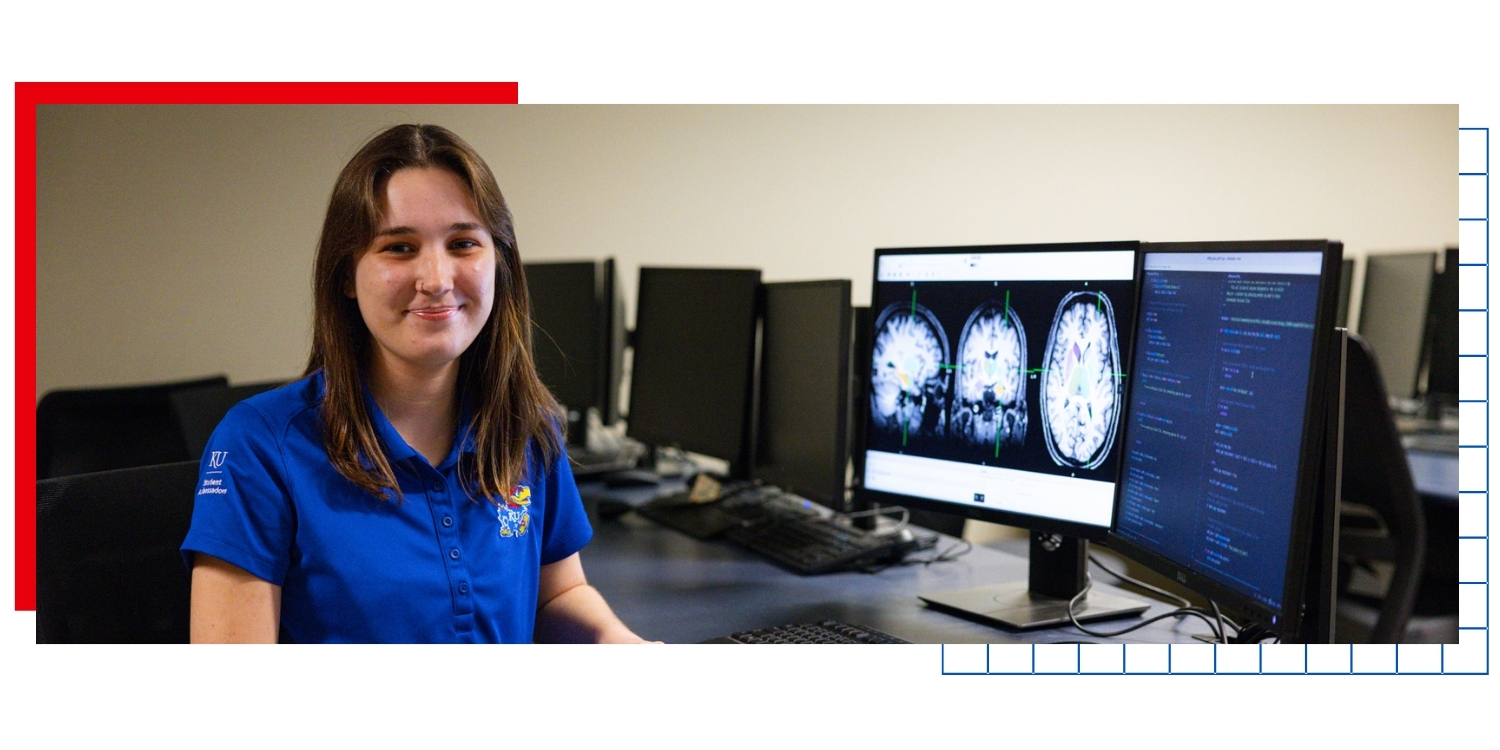
For some students, transferring colleges is about finding a better fit. For KU sophomore Emily Messenger, it was about finding a place where she could fully explore everything she was interested in, both inside and outside the classroom.
After spending her first year at a university in Boston, Emily began thinking more intentionally about what she wanted from her college experience. Originally from Lenexa, Kansas, she found herself drawn to a campus environment that offered a stronger sense of community and tradition.
At the same time, academics remained a top priority. She found the right balance of both within the University of Kansas School of Engineering.
A smooth transfer experience from day one
“I really wanted a more palpable campus culture, and that was something I felt like I could only find with a more traditional college experience,” she said. “That was part of the reason KU was so compelling to me.”
Like many transfer students, Emily also had questions about how her previous coursework would carry over.
“KU connects you with an advisor almost immediately,” she said. “We were able to sit down and go through all of my college credit — whether that’s from my high school or my previous university — and I left feeling a lot more at ease.”
That support made a difference, especially when questions came up. “There was one computer science course that didn’t have a direct equivalent at KU, and my advisor was the first to advocate for me,” she said. “We submitted a few forms, and I eventually got credit from the EECS department.”
An interdisciplinary approach to engineering
Emily came to KU looking for a way to continue a unique academic path.
“I was studying computer science and neuroscience at the same time,” she said. “And I didn’t want to sacrifice either when I transferred.” She found exactly what she needed.
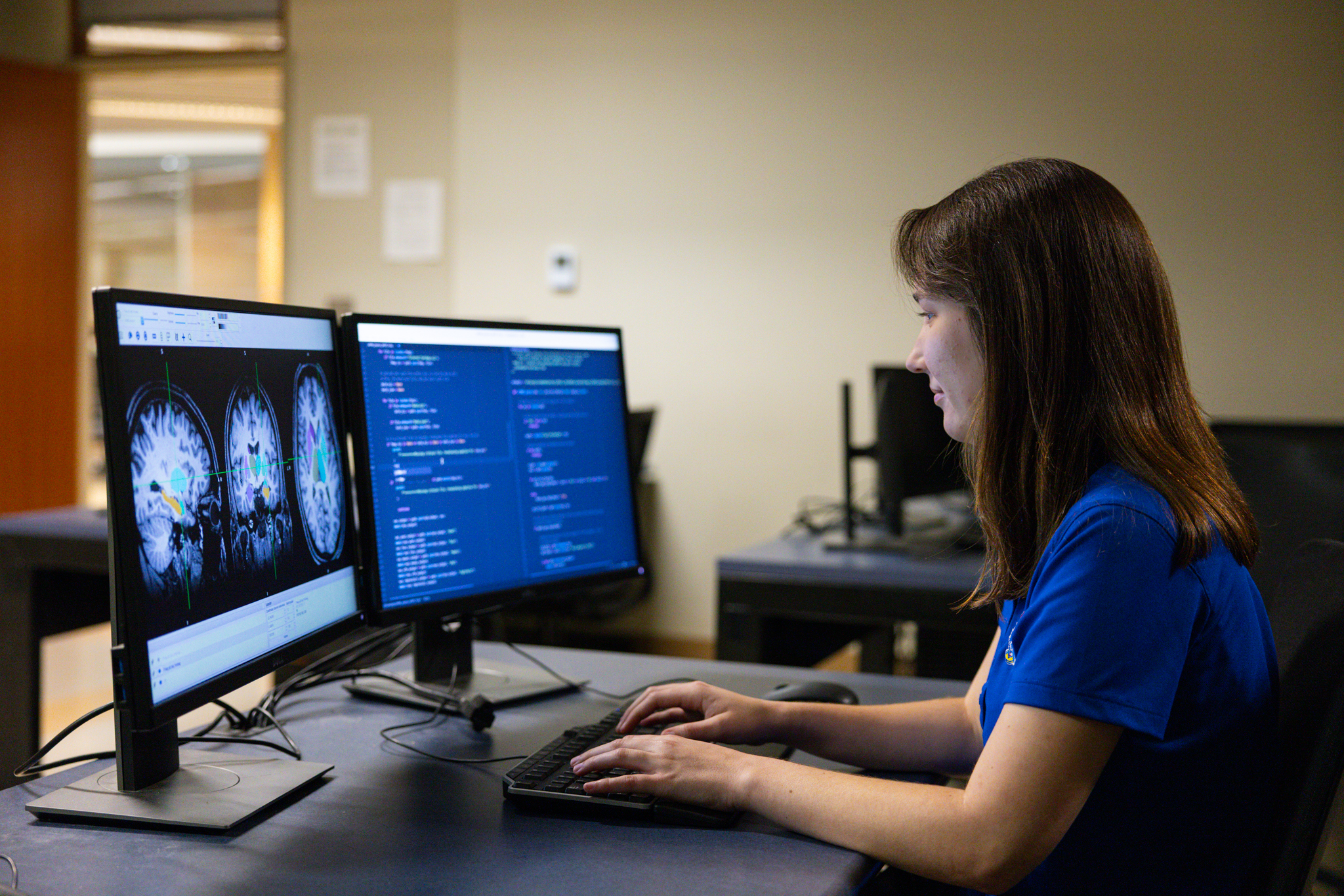
“KU has a really neat degree called Applied Computing, where you take most of the coursework that you’d need for a computer science degree, but also supplement it with some coursework from another discipline,” she said. “For me, that’s biology.”
For Emily, that flexibility was essential.
“The interdisciplinary nature of that degree was really important to me,” she said.
A campus that felt bigger in every way
When Emily visited KU for the first time, the decision became clearer.
“I really, really enjoyed it,” she said. “Even coming from a big city like Boston, my last campus was so small that it felt like I very quickly exhausted all that there was to do.”
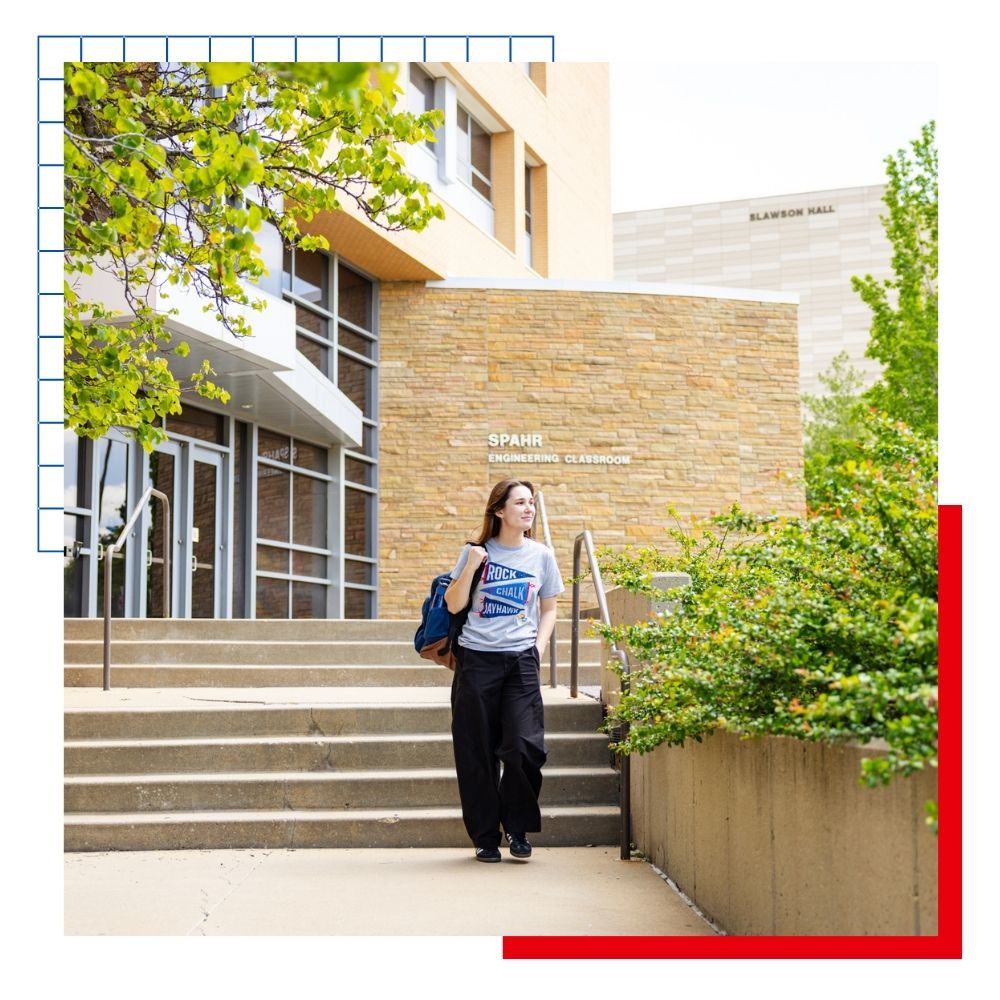
KU felt different right away. “When I got on campus, I realized just how much KU has to offer. There was so much to explore on the Hill; I walked down Jayhawk Boulevard knowing I made the right decision,” she said.
That sense of energy extended beyond the classroom, too. “No venue in the country compares to Allen Fieldhouse,” she said, describing the college basketball experience at KU.
It was the perfect combination. She’d found a vibrant campus atmosphere and academic opportunities that gave her confidence in her decision to transfer.
Research opportunities from the start
One of the biggest surprises after transferring was the scale of opportunity available through research.
“I wasn’t exactly sure what that would look like at KU,” she said. “But KU is an R1 institution, a designation that indicates the highest level of research activity, and I quickly realized I’d have no problem finding opportunities to contribute — whether that’s at the Lawrence campus or at the medical center in Kansas City.”
She quickly found ways to get involved, both on campus and beyond.
“There are so many incredible labs doing cutting-edge translational research, which I’m particularly interested in,” she said. “The Center for Undergraduate Research does a great job of connecting students with those faculty members.”
Emily earned an undergraduate research award in her first semester and began work that connected directly to her long-term goals. “I was able to fund the research I was conducting this spring,” she shared.

Through a research position at Children’s Mercy Hospital, Emily has been able to apply her engineering skills in a clinical setting, an opportunity made possible by KU’s research network. She’s enjoying her experience in an advanced neuroimaging lab, combining engineering with medicine.
Emily’s work has also been supported through her involvement as a SELF Fellow, a competitive program in KU's School of Engineering that recognizes leadership, innovation and entrepreneurial thinking among engineering students.
“I wanted to do work that was computational and I wanted to do work that would have a real impact on patient outcomes,” she said. “And it was just that perfect intersection for me.”
Getting involved as a transfer student
Like many transfer students, Emily knew finding community would take effort.
“I came in wanting to get involved with anything that even remotely piqued my interest,” she said. “I knew, living off-campus, that was going to be my best chance at meeting people.”
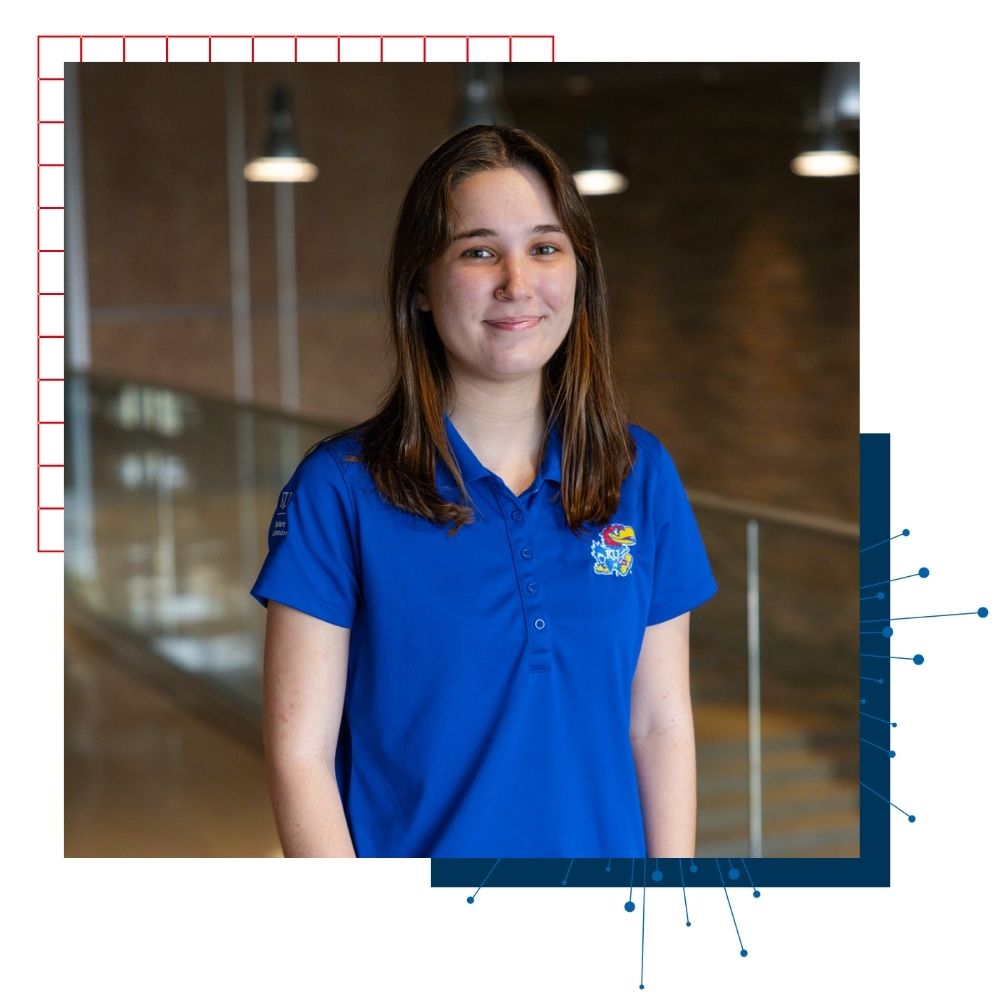
That outlook paid off. She joined organizations like Women in Computing and the Association for Computing Machinery and even became a student ambassador.
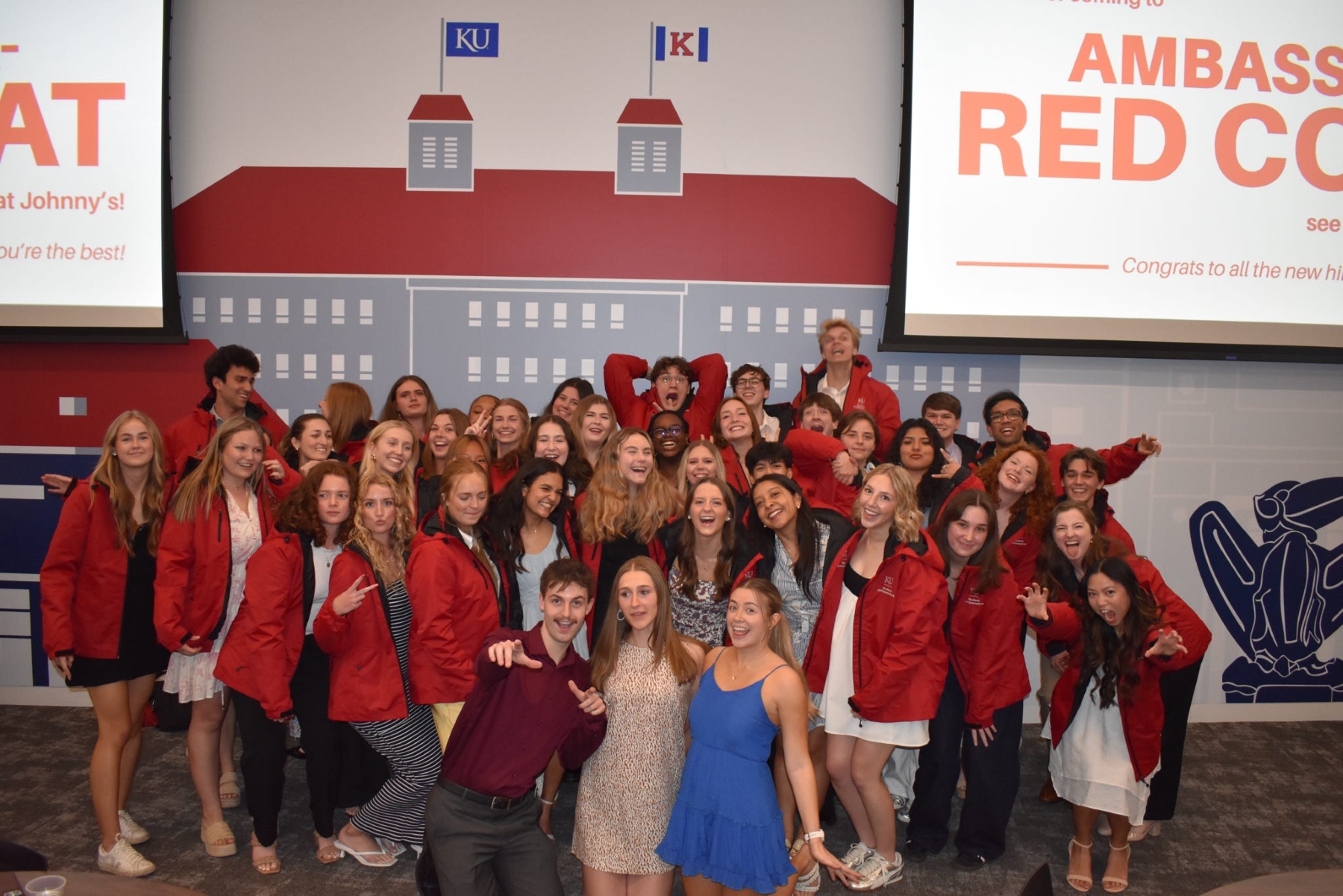
“The ambassador team is the best,” she said. “They are all so passionate about KU and what it has to offer, as well as Lawrence and the surrounding community.”
Her experience as an ambassador has also come full circle. “I’ve been able to speak to students that were in my position and are considering transferring to KU,” she said. “And that’s been really rewarding too.”
A path forward shaped by opportunity
Beyond joining existing organizations, Emily is already working to create new ones.
“I’ve been able to differentiate myself here at KU, and I’ve been able to explore things that I don’t think I would be able to at other places,” she said.
She is currently helping launch a new student organization called the Kansas Research Collective, focused on research access and mentorship. “It’s going to provide students with peer-to-peer mentorship and opportunities to share and publish their research,” she said.
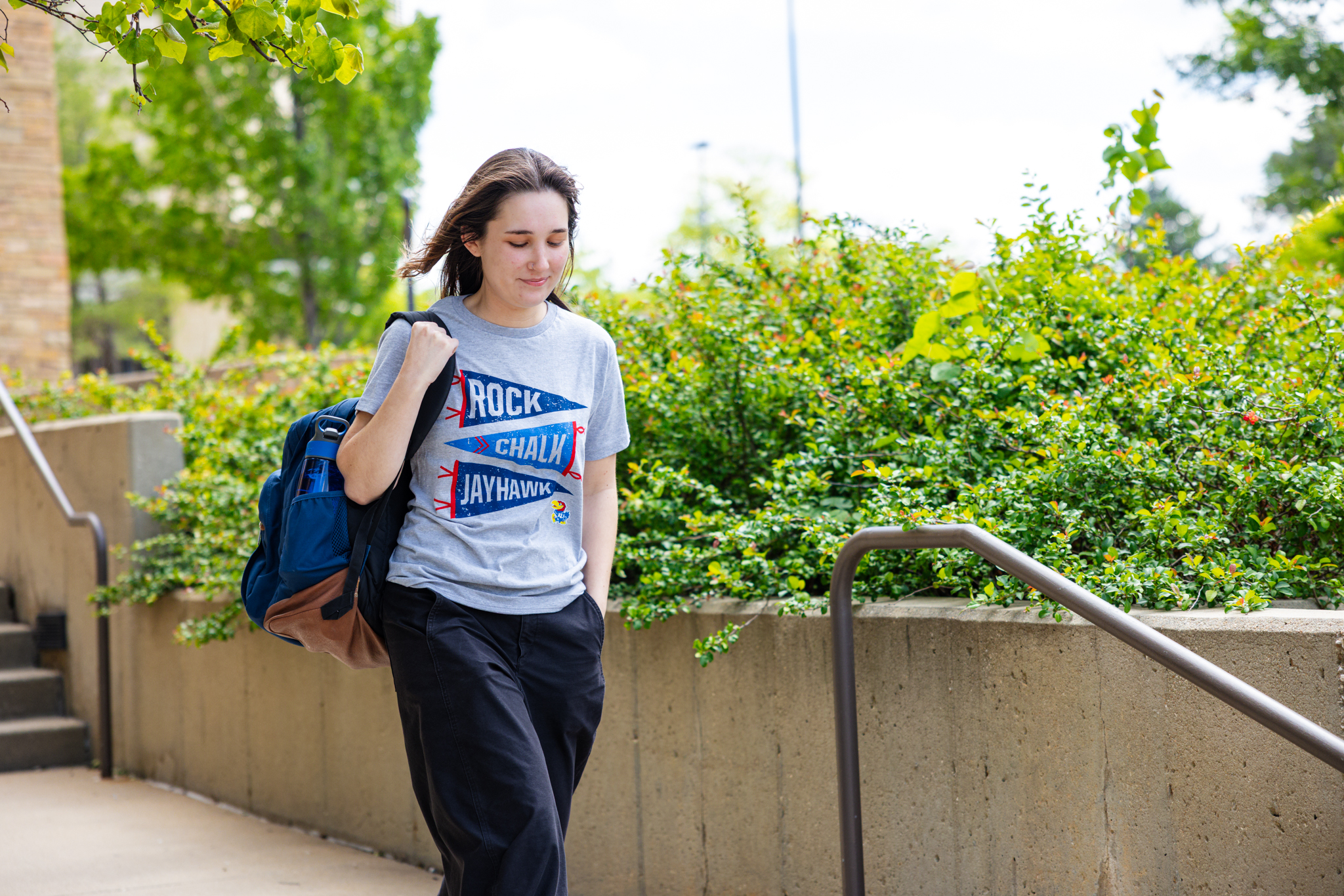
Through her experiences at KU, Emily has also refined her goals for the future.
After combining engineering, research and medicine, she is now considering an MD-PhD path that allows her to pursue both patient care and research.
Her advice for other transfer students is simple. “Get involved with anything that even remotely piques your interest,” she said. At KU, that approach has opened doors she didn’t expect and helped her build a path that is entirely her own.