How the Kirkendall Challenge Changed My Engineering Career Path
KU is the kind of place where one unexpected “yes” can change your direction. For Mechanical Engineering student Charlie Erker, the Kirkendall Awards Ideation Challenge did exactly that.
At KU, students like Charlie Erker are encouraged to explore opportunities that stretch their skills and expand their view of what’s possible. From entrepreneurship challenges to interdisciplinary projects, they often find that one experience can change not only what they want to do, but how they think about their future.
For Charlie, that meant exploring how engineers can work with emerging technologies like AI rather than compete with them.
This is a student-submitted story, shared to give you a real KU student point of view. It’s part of our Jayhawk POV series, where you can read more firsthand stories from students about learning, leadership, and finding their path.

Kirkendall Awards Ideation Challenge
My name is Charlie Erker, I am a sophomore mechanical engineering major at KU, and if you had told me a year ago that I'd be thinking about a career in sales or consulting instead of traditional engineering, I probably wouldn't have believed you. But that's exactly what happened after ten weeks in the Kirkendall Awards Ideation Challenge.
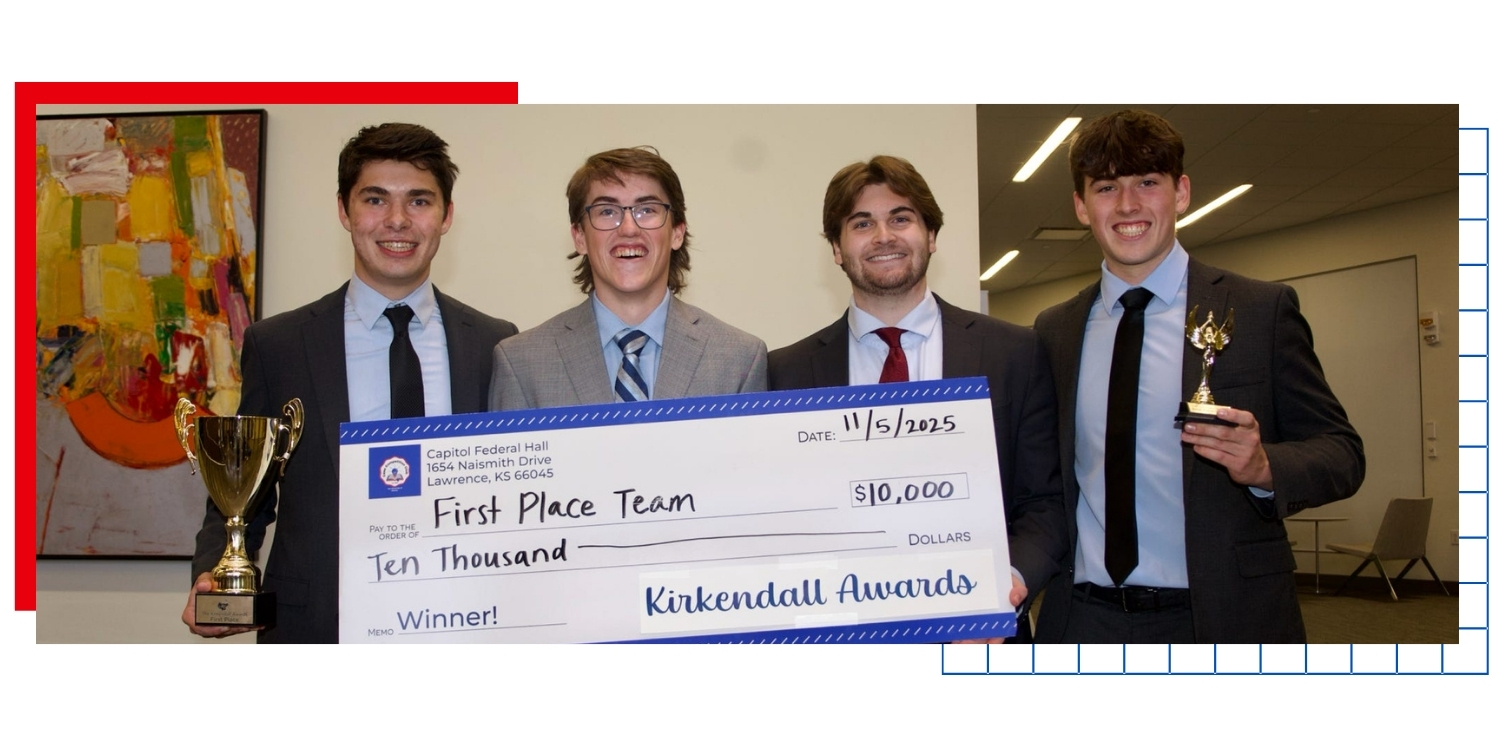
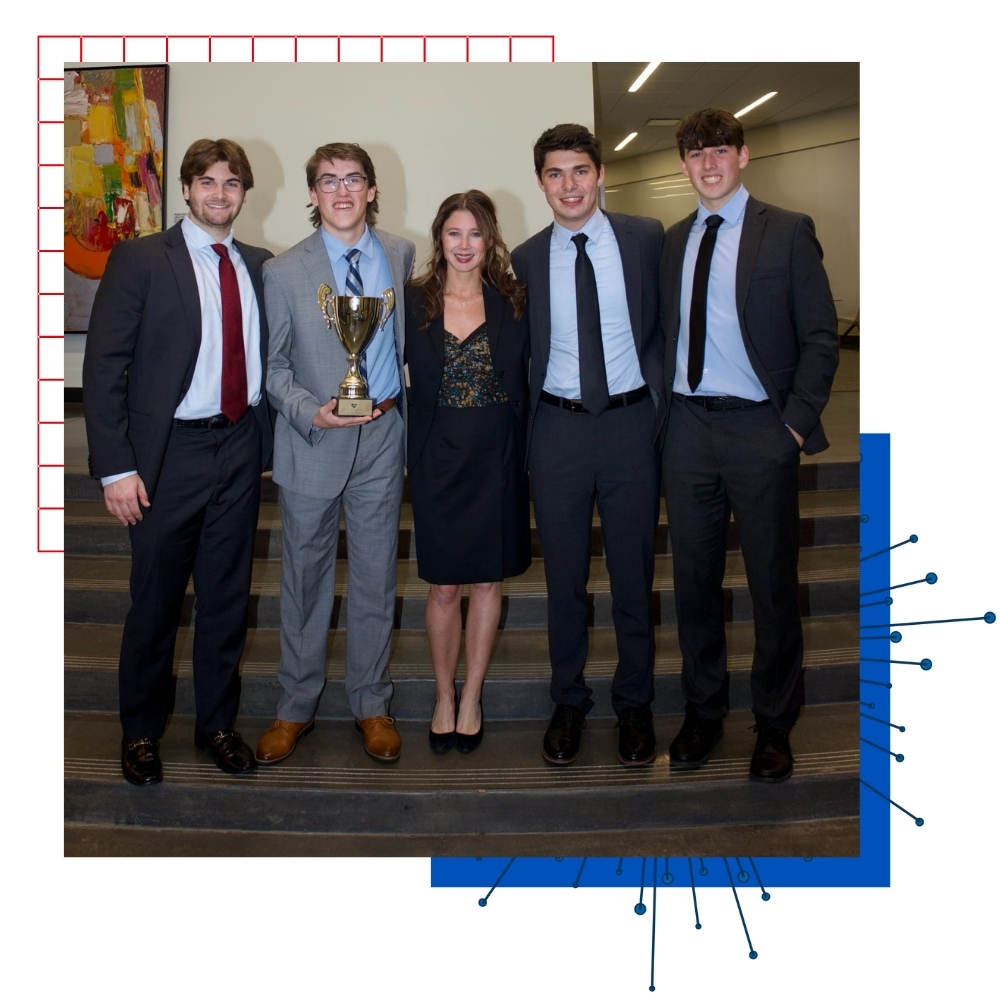
My team, Alex Howell, Andrew Howell, Kevin Beyer, and I, had just won a case competition when Professor Erin Whitehurst asked if we'd be interested in participating in the first-ever Kirkendall Awards Ideation Challenge.
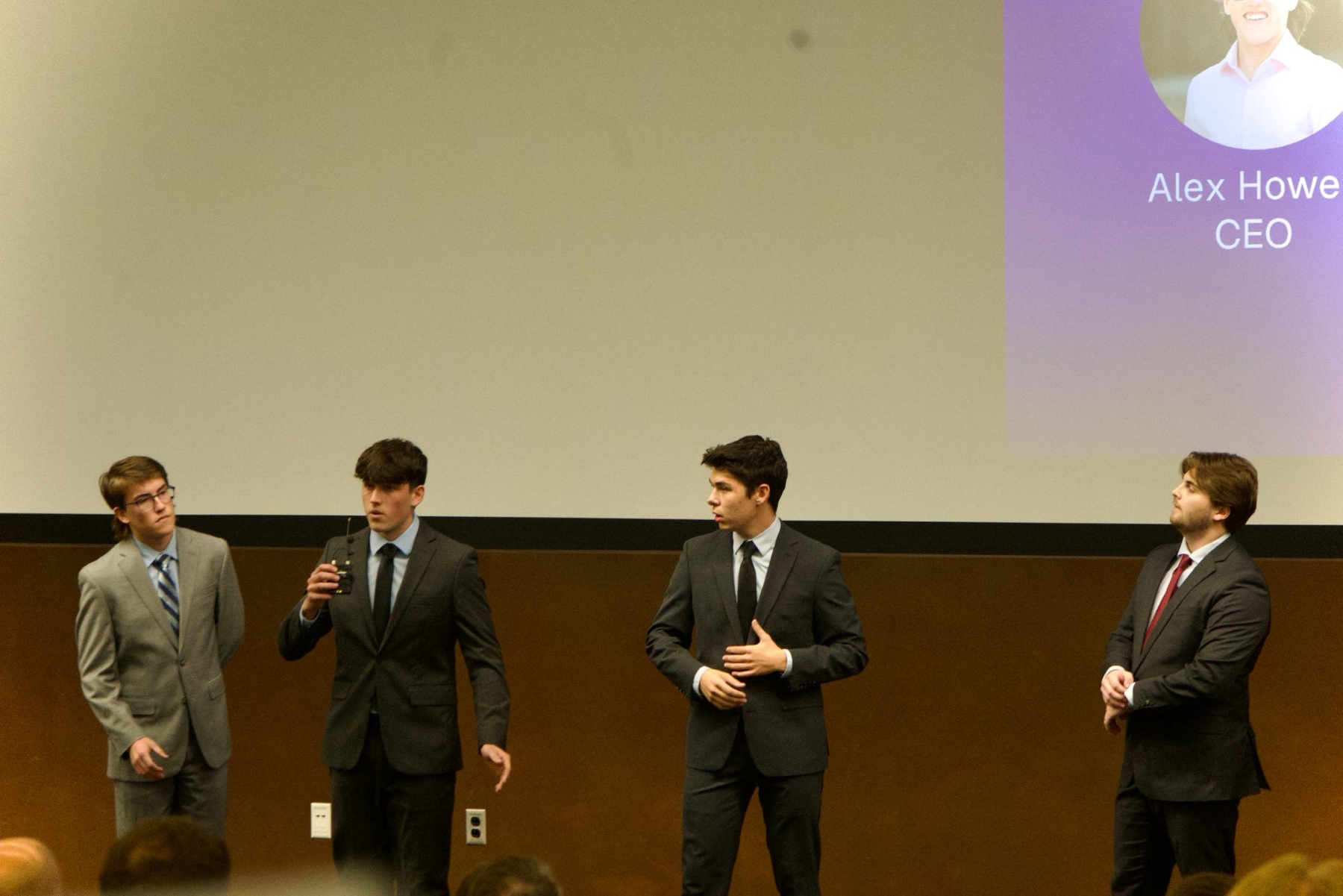
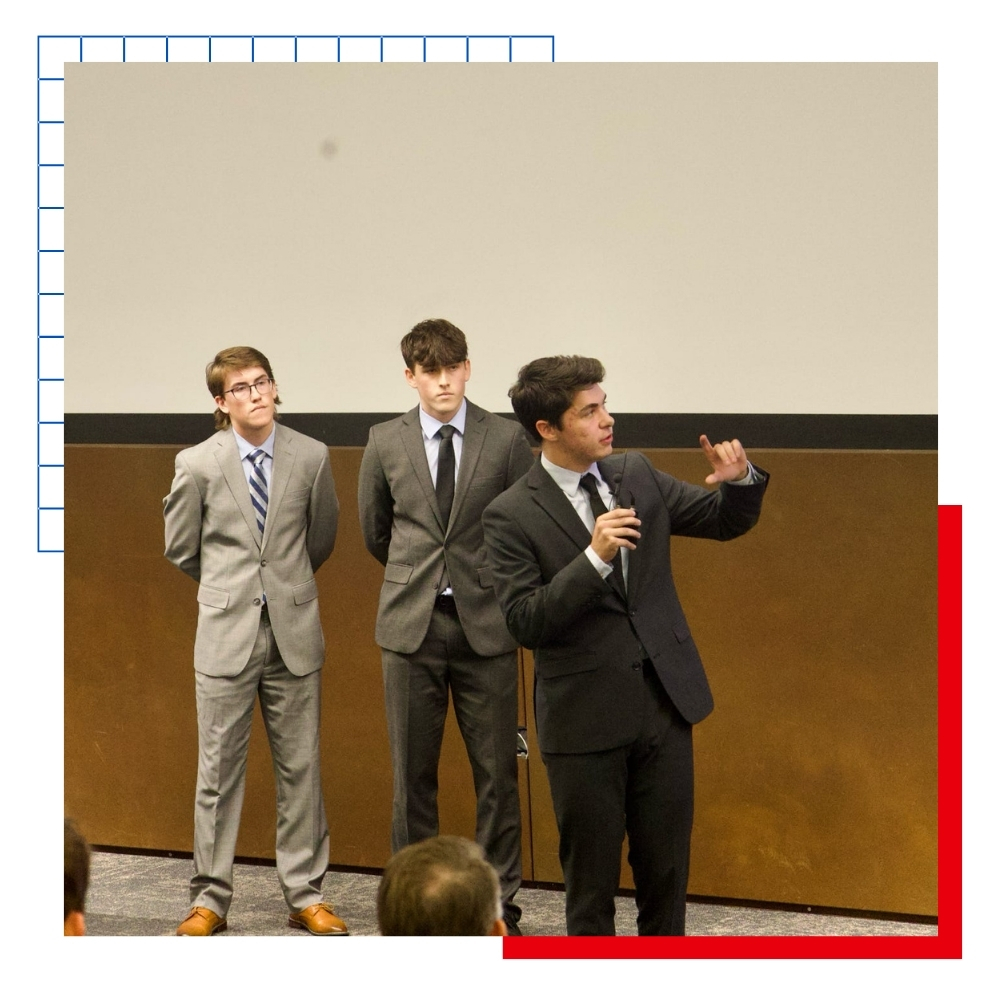
The Kirkendall Awards Ideation Challenge is a 10-week entrepreneurship competition through the School of Business where teams develop startups and present to industry-leading professionals in two rounds of judging. She described it as an entrepreneurial think tank meets Shark Tank meets case competition, and I was immediately hooked.

There was $18,000 in prizes on the line, which eventually became $23,000 after ties were factored in, and we ended up taking home $10,000 for first place. But I'll be honest, when I saw the prompt "How might we ethically integrate AI into education?" I had serious doubts. As a mechanical engineering major, I wanted to build something physical, not develop an AI website.
But here's what I've learned: no one is ever fully qualified for the opportunities that come their way, so why not you?
Leveraging Networks
The first three weeks were all about defining the problem. We conducted eight interviews with business professionals and educators to understand the challenges of ethically integrating AI into education.
These weren't just informational interviews, many of these helped form our company and the people we interviewed quickly became genuine mentors invested in our success. This was my first real experience leveraging my network for a school project, and it completely changed how I think about professional relationships.
As Chief Operations Officer, I was responsible for our marketing strategy, sales channels, and engineering the AI prompts for Gemini, which became the backbone of our product: DepthAI. DepthAI encourages understanding over answers by combining elaborative learning techniques with AI-driven dynamic worksheets for high schools.
The Turning Point
Halfway through, we thought we were ready. We scheduled a meeting with the Olathe School District hoping to test our product with students. What we didn't expect was that the Chief Technical Officer of the school district would be there.
In the meeting that followed we were called out for violations of CIPPA, COPA, SOC 2, and what felt like every federal standard that exists. Our product wouldn't be viable in our market segment at all. It felt like the end of the project.
But that meeting became our turning point. We spent two weeks making our product more viable, valuable, and safe. Three weeks later in the final round of judging, every question from industry-leading professionals felt easier because we'd already faced the hardest questions. All four of us attribute our first-place tie to that moment of failure.
What Changed
Going into this challenge, I thought like an engineer: build something cool, then find someone who needs it.
This experience taught me to think like an entrepreneur: start with the problem, understand the people you're serving, and build something that meets their actual needs. That shift has fundamentally changed my career trajectory toward consulting or engineering sales.
Why Not You?
If there's one thing I want you to take away, it's this: no one is ever fully qualified for the opportunities that come their way, so why not you? When Professor Whitehurst asked if we wanted to participate, I wasn't qualified to prompt engineer AI or navigate federal education compliance. But I said yes anyway, and it changed my entire perspective on my career.
KU gives you the chance to try things outside your major and take risks in a supportive environment. The Kirkendall Awards Ideation Challenge wasn't just about winning $10,000, it was about discovering talents I didn't know I had, building genuine professional relationships, and figuring out what actually excites me about my future.
Whatever your major, find those opportunities that make you uncomfortable and say yes anyway. You might just surprise yourself.